
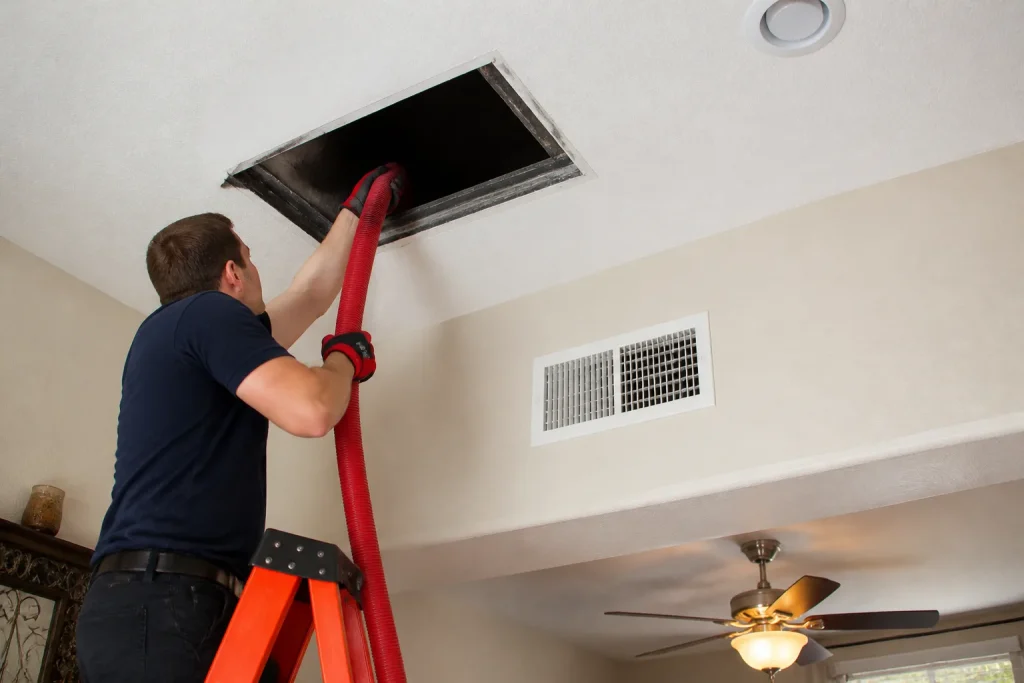
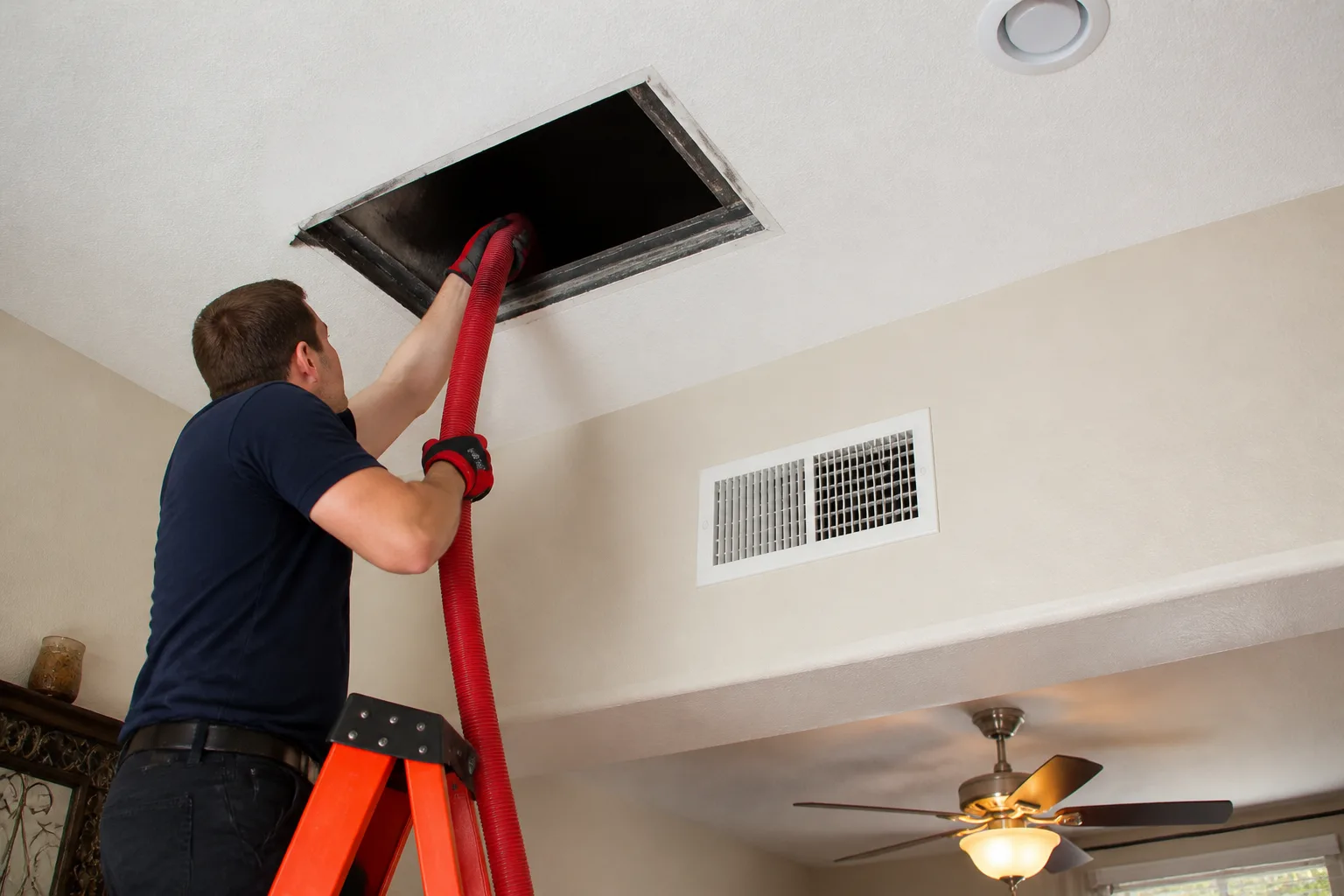
Emergency Air Duct Cleaning Near Me: What La Habra Homeowners Should Do First
The most expensive mistake after a duct emergency isn’t waiting too long. It’s running your HVAC while you search for help, which spreads contaminants through every room in a house faster than most people expect. Before you pick up the phone, spend fifteen minutes on triage: figure out what kind of problem you actually have, shut the system down, and get the facts a technician will need. Most “emergencies” turn out to be containable. The few that are genuine need the right call, not just a fast one. If you’d rather not work it out yourself, call (877) 367-5749 and we’ll walk you through it.
Key Takeaways
- Turn the thermostat to OFF and switch off the air handler before anything else.
- Only three situations are true duct emergencies: rodent intrusion, post-fire smoke, and sewage or moisture breaches.
- Musty smells, dust puffs and uneven airflow can usually wait 24 to 48 hours.
- Older La Habra homes with pre-1980 flex duct escalate faster and need faster decisions.
- Have the system type, the smell, the location and any visible damage ready before you call.
What Counts As a Real Duct Emergency?
A real duct emergency is one where contamination is actively spreading or the system is a health hazard right now. Three situations qualify: rodents or other animals inside the ductwork, smoke residue from a fire, and a sewage or water breach that has soaked duct insulation. Everything else can wait a day.
Here’s why the distinction matters. A duct system is a closed loop connected to every room in the house. When the blower runs, whatever is inside the ducts gets pushed into the air you’re breathing. Rodent droppings, smoke particles and sewage bacteria all travel that same path. Keeping the blower off stops the spread while you make decisions, and it’s the single most useful thing you can do in the first few minutes.
Rodent intrusion is the most common true emergency we see. Chewed flex duct, droppings, and the smell of urine in a return are the usual signs. Post-fire smoke is next: even a small kitchen fire leaves residue that coats duct interiors and re-circulates every time the system runs. Sewage breaches happen after a plumbing failure or a roof leak soaks the insulation around ducts in an attic. All three need professional equipment, not a shop vacuum.
If you’re not sure which category you’re in, describe what you smell, see and hear to a technician before booking. The answer usually becomes obvious in a two-minute conversation.
What Should You Do Before the Technician Arrives?
Turn the system off first. Set the thermostat to OFF, then switch off the air handler at the breaker or the service switch. That single step prevents cross-contamination through every room while you wait. Then close off the affected area, note what you’ve observed, and don’t run fans or a portable vacuum near the vents.
- Set the thermostat to OFF. Don’t switch to fan-only. OFF means off.
- Kill power at the air handler. A breaker or service switch is usually nearby.
- Close doors to the affected rooms. Keep pets and kids out of the area.
- Don’t run a household vacuum or floor fans near the vents. Both stir contamination.
- Bag up anything visibly contaminated that’s easy to remove (a filter, a vent cover) and set it aside for the technician to inspect.
- Take photos. The vent, the smell source, the water line, the droppings. Photos speed up diagnosis.
Do not open the plenum, remove duct sections, or try to clean inside the ducts yourself. That’s where the dangerous stuff lives, and there’s nothing a homeowner can safely do inside a pressurized system that a Rotobrush or Nikro setup can’t do better.
What Will the Technician Ask You on the Phone?
A qualified technician will ask six things: what triggered the call, when it started, what you can smell or see, whether the system is currently running, how old the home is, and whether anyone in the household has allergies, asthma or a compromised immune system. Having answers ready cuts diagnostic time and shortens the visit.
- Trigger: fire, water, rodent, renovation dust, or “it just started smelling.”
- Timing: hours, days, or has it been building for a while.
- Sensory details: musty, chemical, sewage, dead-animal, smoke. Each points to a different cause.
- System status: running or off, and whether it’s central, mini-split, or something else.
- Home age and duct type: pre-1980 homes often have flex duct that’s more fragile.
- Occupants: anyone with respiratory sensitivity changes how we sequence the job.
If the answer to any of those is “I’m not sure,” say so. Guessing slows the diagnosis down. A technician who specializes in full-system work will also ask whether you’ve noticed a rise in the energy bill or uneven airflow recently, since both are quiet signals of leaks or partial blockages that a standard vent vacuum won’t fix.
Why Do Older La Habra Homes Escalate Faster?
La Habra has a lot of housing from the 1950s through the 1970s, and much of it uses flex duct systems that are past their design life. Flex duct is a plastic liner inside a wire coil, wrapped in insulation. When it cracks, tears or collects moisture, contamination reaches the insulation fast and can’t be cleaned out, only replaced. That’s why the same situation in a 1965 La Habra ranch house can go from “smells a little musty” to “tear it out” inside a week, while a newer build has more buffer.
La Habra also sits in a warm, dry inland climate. That’s generally good news for duct systems, but it means water intrusion from a roof leak or plumbing failure doesn’t dry out as fast as homeowners assume. Moisture that sits inside flex duct insulation becomes a mold concern quickly. Once mold takes hold, cleaning alone won’t fix it. Duct repair and sealing becomes part of the job, which is why we offer it as a standard category rather than a special order.
Attic routing is another factor. In many La Habra homes, ducts run through an unconditioned attic where summer heat bakes the insulation. Rodents use that same attic space to travel. In an older system, a small chewed hole becomes a full breach within a season. If you’re noticing a new smell or a sudden rise in cooling costs, that’s the sequence that usually explains it.
Why a Full-System Specialist Beats a Standard Duct Cleaner in an Emergency
In a real emergency, the difference between a standard duct cleaner and a full-system specialist comes down to equipment. A basic truck-mounted vacuum can pull dust out of ducts. It can’t contain a mold-adjacent situation, sanitize the system afterward, or seal the leak that caused the problem. That work needs three things most duct cleaners don’t bring.
First, professional-grade rotary brush and negative-air equipment. We use Rotobrush and Nikro systems for the cleaning itself, and Abatement Technologies negative-air equipment when the job needs containment, like a mold-adjacent remediation or post-renovation dust. Negative pressure pulls air out of the work area so contamination doesn’t migrate into the rest of the house while we’re working.
Second, sanitizing. After the mechanical clean, a surface treatment on the duct interior addresses what brushing can’t remove. We use Guardsman-grade sanitizing protocols for air quality work.
Third, duct repair and sealing on the same visit. This is the step most standalone duct cleaners skip. If a technician cleans your ducts and leaves the chewed hole in place, the problem comes back. Sealing closes that gap the same day, which is why we treat repair as part of the emergency response and not a follow-up appointment.
After the work, if the system would benefit from air quality products, we supply and install Honeywell and Aprilaire components. That’s a conversation for after the emergency is handled, not during it.
When to call a pro: if you’re in any of the three emergency categories (rodent, fire, sewage), if you can’t tell what’s wrong, or if the smell has come back after a prior cleaning. Call (877) 367-5749. We answer 24/7. Fast dispatch from 7am to 7pm, Sunday through Friday. Same-day appointments are available when the schedule allows. Call now for a free estimate if you’d like to talk it through first.
Related services in La Habra: for routine work, see air duct cleaning. For lint and heat concerns in the laundry, see dryer vent cleaning. For coil and blower cleaning that pairs with duct work, see HVAC cleaning.
What Are the Three Real Emergency Types, in Detail?
Rodent intrusion, post-fire smoke, and sewage or moisture breaches are the three. Each one is treated differently, and each one is worth calling about now.
Rodent intrusion
Droppings, chewed flex duct, urine odor in a return, or scratching sounds when the blower runs. Rodents enter through gaps around the air handler, unsealed penetrations, or attic vents. Cleaning the ducts is only half the job; the entry point has to be sealed with duct repair work or the problem returns.
Post-fire smoke contamination
Even a small kitchen fire deposits soot on duct interiors. Soot re-circulates every time the blower runs and the smell can linger for months. Cleaning plus sanitizing is the standard response, and a negative-air setup is often needed so soot doesn’t migrate during the clean.
Sewage or moisture breach
A plumbing failure or roof leak that soaks duct insulation is a mold risk and a health risk. If insulation is wet, it can’t be cleaned, only replaced. This is where a full-system repair and sealing visit is essential; a standard duct clean won’t fix a soaked boot.
Anything else (dust, musty smell, uneven airflow, a bit of renovation grit) can usually wait a day or two. Get an estimate, schedule the work, keep the system off in the affected zone if the smell is strong. There’s no need to pay a premium for something that’ll still be there tomorrow.
The Bottom Line
Most “emergency” duct calls in La Habra aren’t emergencies. They’re containable problems that need the right triage first: system off, area closed, information ready, and a call that gives the technician enough detail to show up prepared. Rodent intrusion, fire smoke and sewage breaches are the three that need immediate attention. Everything else can be scheduled without panic.
The right equipment on the truck matters more than the speed of arrival. Professional-grade Rotobrush and Nikro cleaning, Abatement Technologies negative-air for contamination-sensitive jobs, Guardsman-grade sanitizing, and duct repair and sealing on the same visit are the difference between a fix and a repeat call. Our technicians have up to 10 years of experience, which is why the phone conversation is usually longer than the homeowner expects. It saves time on the visit.
If you’re in La Habra and need help, La Habra Air Duct Cleaning Pros offers free estimates. Call (877) 367-5749. We answer 24/7. Fast dispatch from 7am to 7pm, Sunday through Friday. We’re closed Saturday, so a Saturday call gets booked into the next opening on Sunday. One flat price per system, agreed before work starts, with before-and-after photos of your own ducts so you can see exactly what changed.
Frequently Asked Questions
Most emergency duct cleaning in La Habra falls into a whole-system range set by the written estimate, not a per-vent or coupon price. Rodent intrusion and moisture jobs often include repair and sealing, which changes the scope. The estimate is free, and you’ll know the price before any work begins. Call (877) 367-5749 for an exact quote, estimates are free.
Cheap quotes usually cover vent vacuuming only, not the duct system, the sanitizing, or the repair. If the technician cleans but doesn’t seal the chewed duct or replace soaked insulation, the problem comes back and you’ll pay twice. Ask any contractor what’s included in their price, and whether repair and sealing are part of the visit. Call (877) 367-5749 to compare scopes, estimates are free.
Ask for before-and-after photos of your own ducts, taken during the job. A technician using professional rotary brush equipment will have no trouble providing them. We take them on every job. Call (877) 367-5749 if you’d like to see examples from a similar home, estimates are free.
Most homes in La Habra can go several years between cleanings under normal conditions. Homes with pets, recent renovation, allergies, or a prior rodent issue often benefit from a shorter interval. If you’re noticing musty smells or rising energy bills, get an inspection before assuming it’s time for a full clean. Call (877) 367-5749 for a free assessment, estimates are free.
Written by the team at La Habra Air Duct Cleaning Pros.
Need Air Duct Cleaning Help?
Call La Habra Air Duct Cleaning Pros - the local pro we connect you with is licensed and insured, with free written estimates in La Habra.
(877) 367-5749