
Last updated November 23, 2026
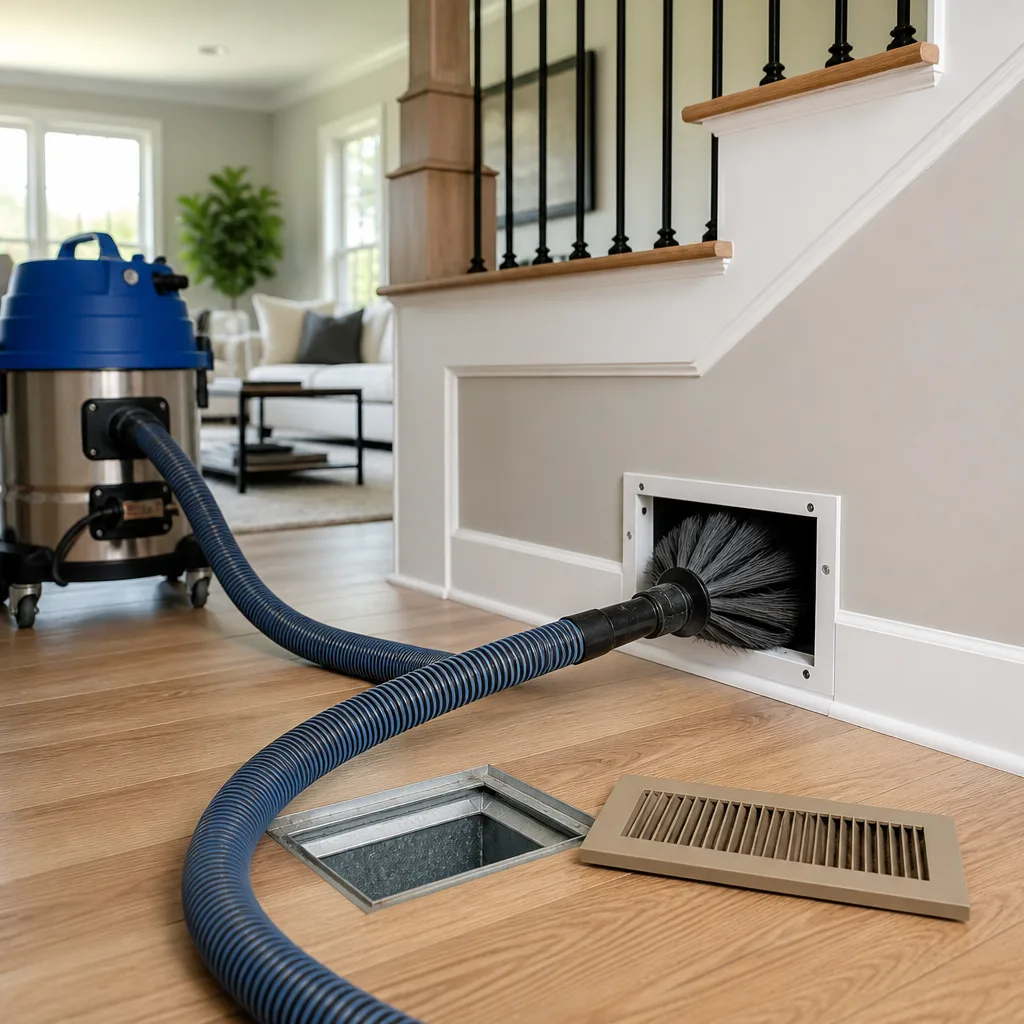 Whole-home duct cleaning
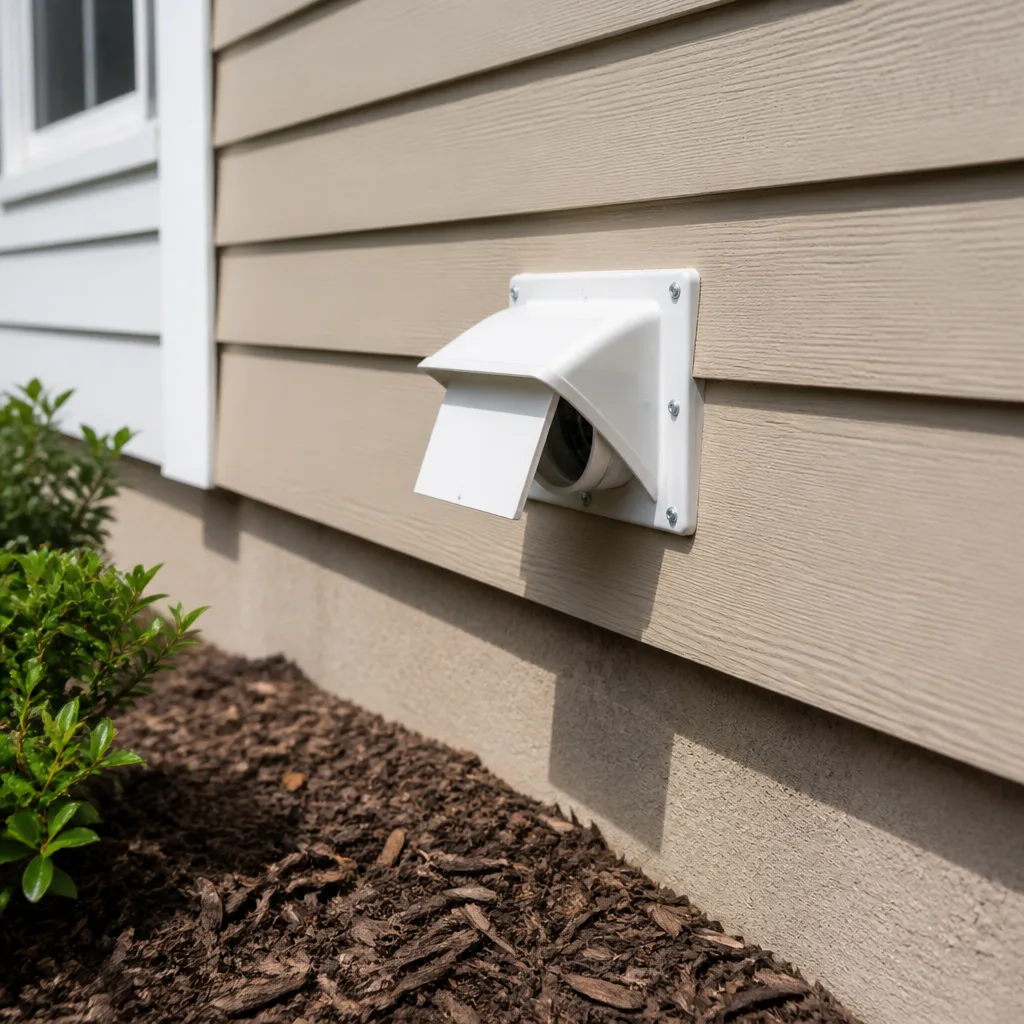 Dryer vent cleaning
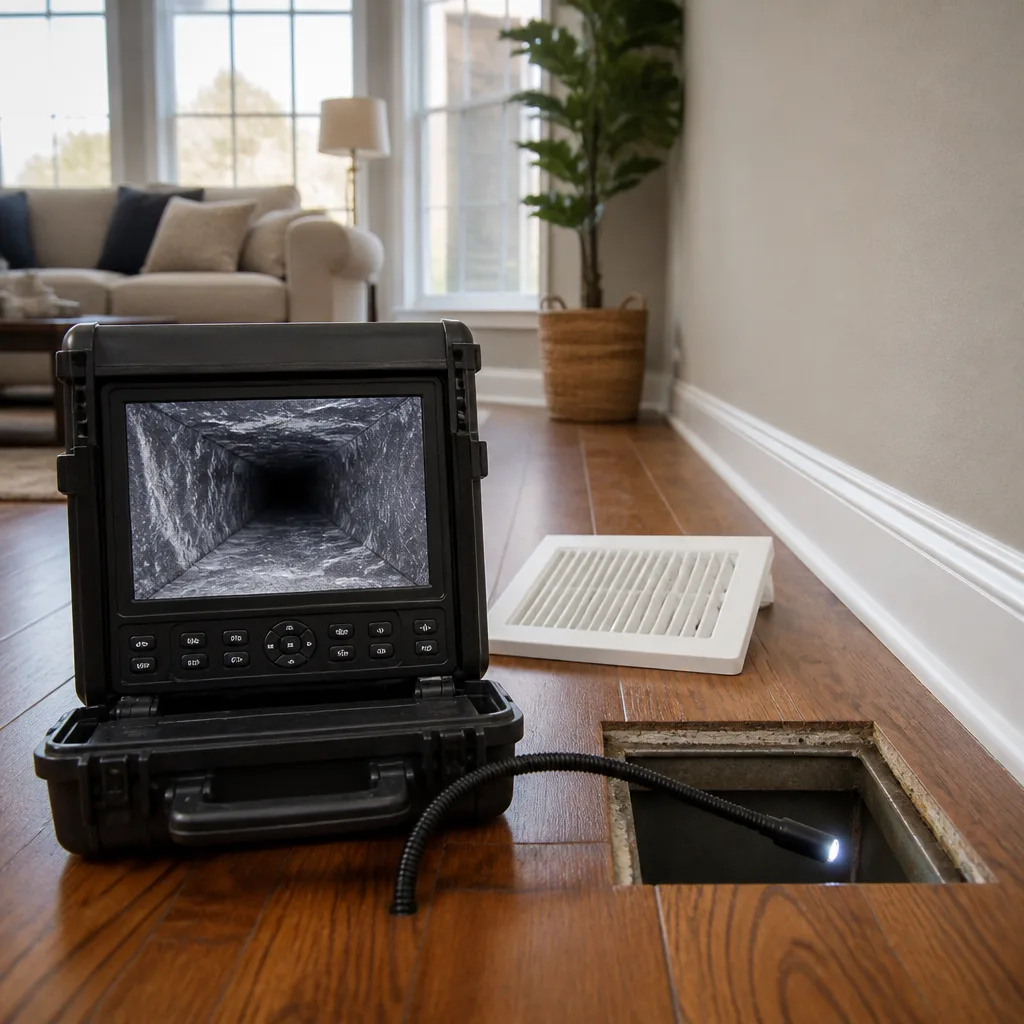 Camera inspection
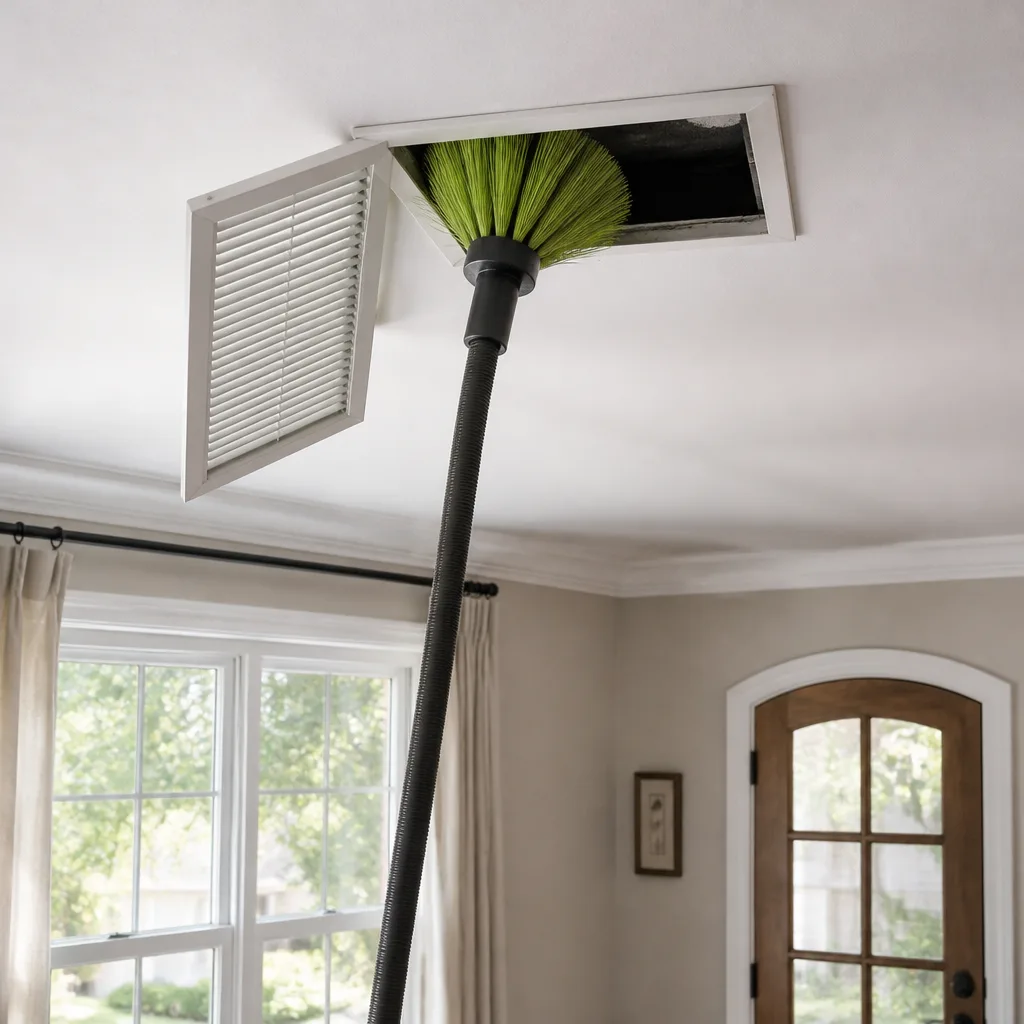 Sanitizing & deodorizing
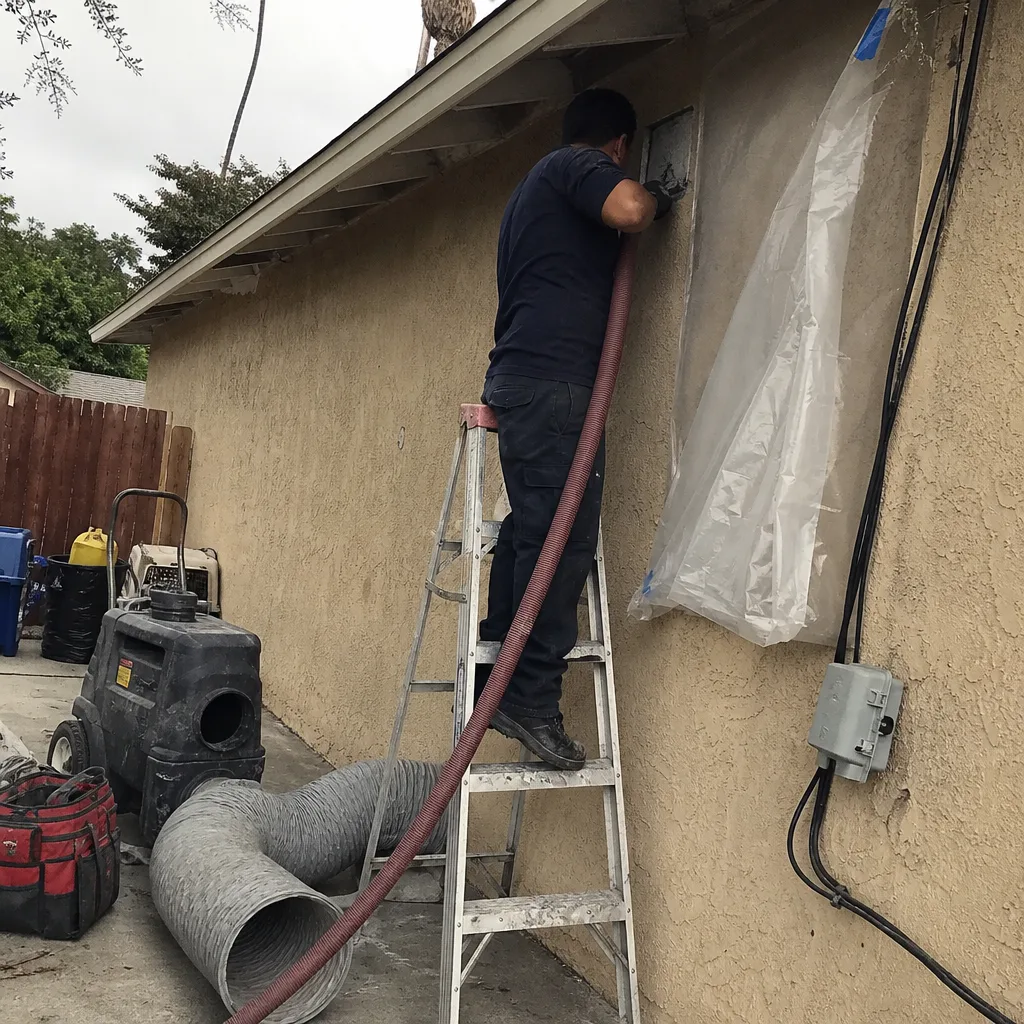
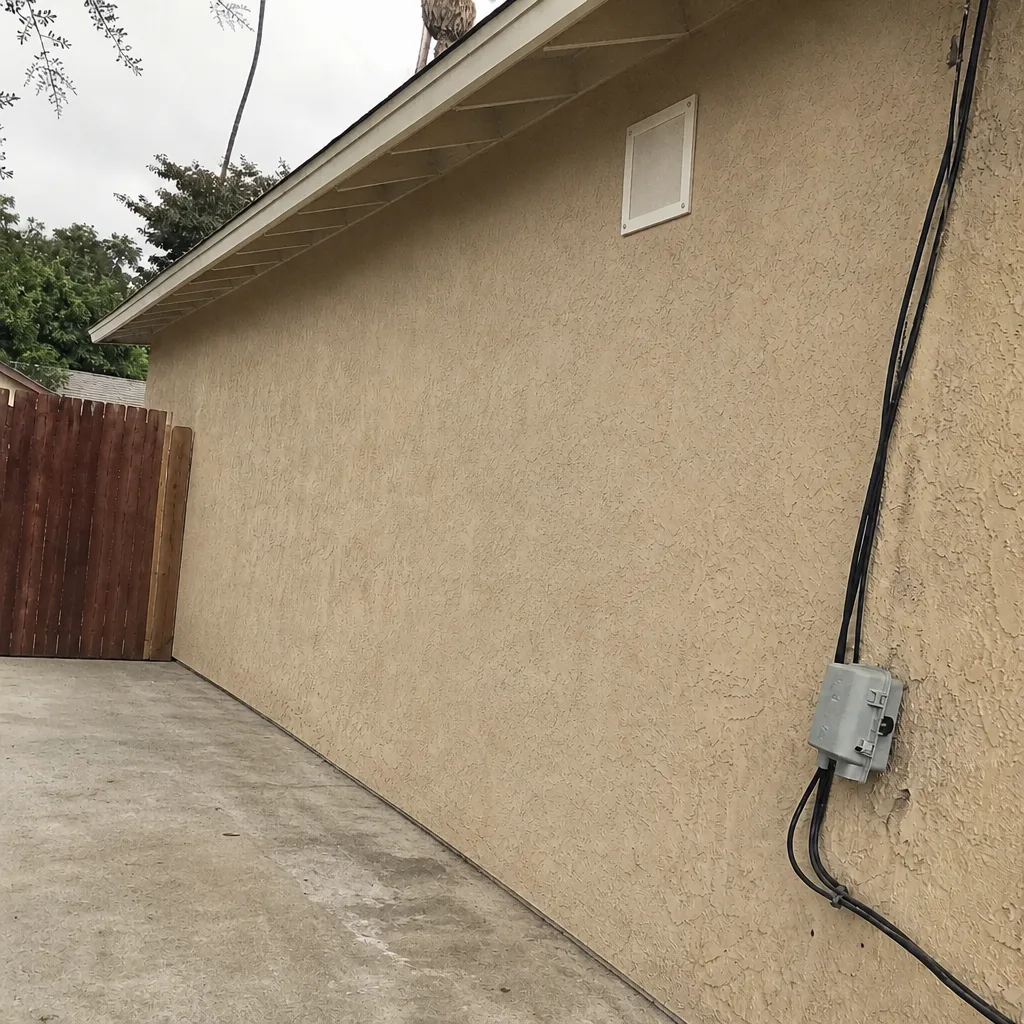
Whole-system duct and dryer vent check with before-and-after photos - you see exactly what came out of your vents
That "$99 whole-house special" is a bait ad - the real number appears once they are in your hallway, or the "clean" is a shop-vac at the register. We photograph the inside of your ducts before and after instead.
Air Duct Cleaning Permits, Codes & Inspections in La Habra, CA: What You Need to Know
Most homeowners assume air duct work is like vacuuming a carpet: no paperwork, no oversight, nothing to record. That assumption holds for cleaning. It falls apart the moment a technician recommends sealing a leaking joint, reconnecting a loose trunk line, or replacing a damaged section of duct. In California, that repair stops being maintenance and starts being permitted mechanical work, and the responsibility for getting it right lands on you as the property owner. This guide walks through where the legal line sits for La Habra properties, what the City of La Habra building department expects, what Title 24 has to say about duct alterations, and what an inspector actually looks for before signing off.
Quick Answer
Routine air duct cleaning in La Habra does not require a permit. Sealing, repairing, or replacing ductwork is classified as mechanical work under California’s building code, and alterations that touch the duct system generally trigger a mechanical permit through the City of La Habra building department, with Title 24 energy code documentation attached for duct sealing and replacement. Cleaning after confirmed mold contamination sits in a middle zone where documentation and clearance testing may be required even though the cleaning itself needs no permit.
Styles & brands we work with
- Whole-home duct cleaning
- Dryer vent cleaning
- Camera inspection
- Sanitizing & deodorizing
Table of Contents
- Cleaning vs. Repair: Where the Permit Line Sits
- What California Title 24 Says About Duct Alterations
- The City of La Habra Permit Process for Duct Work
- How Duct Sealing Is Classified Under California Mechanical Code
- What Inspectors Look For on Duct Repair Work
- Cleaning vs. Remediation After Confirmed Mold
- Why Unpermitted Duct Repairs Fail Home Sale Inspections
- What to Ask a Duct Contractor Before Work Starts
Cleaning vs. Repair: Where the Permit Line Sits
Cleaning is a maintenance activity. It removes dust, debris, and settled particulate from inside an existing duct system without changing the system’s physical configuration. No structural alteration, no energy performance change, no permit. This is true across California and it’s true in La Habra.
Repair changes the system. The moment a technician removes and reattaches a duct section, reseals a disconnected joint with mastic or aerosol sealant, replaces flexible duct with rigid duct, or relocates a run to serve a different room, the work falls under the California Mechanical Code and usually under the Title 24 energy provisions as well. That’s when a mechanical permit becomes part of the conversation.
Here’s the practical breakdown:
- Cleaning only – no permit. Rotary brush and negative-air vacuum work, no system modification.
- Mastic or tape sealing of accessible joints – in most cases this is treated as repair and requires a mechanical permit, especially when it’s part of a broader energy compliance effort.
- Aerosol sealing (Aeroseal-style injection) – classified as duct sealing under Title 24 and generally permitted with documentation of before-and-after leakage.
- Replacing a section of duct or a trunk line – mechanical permit, and often Title 24 duct insulation requirements.
- Adding a new duct run or relocating a register – definitely permitted work, and may pull in load calculations.
What we see in practice is that homeowners are told “we’ll just patch that” and nobody mentions the permit because the repair is small and hidden in an attic. Small and hidden doesn’t change the classification. If you’re going to sell the house, an unpermitted duct repair becomes a disclosure problem, and in some cases the buyer’s inspector will flag it and the escrow stalls while you sort it out.
The clean way to run this: separate the cleaning invoice from the repair scope. Cleaning is air duct cleaning, which needs no paperwork. Repair is a discrete line item that gets its own permit, its own inspection, and its own record. If a contractor tries to blend the two so the repair “rides along” with the cleaning, ask why. The answer is rarely good.
What California Title 24 Says About Duct Alterations
Title 24, Part 6, is California’s energy code. It governs how buildings use energy, and ductwork is a big part of that because leaking ducts in an unconditioned attic waste a significant quantity of conditioned air. When Title 24 was updated, duct sealing and duct insulation standards tightened, and that tightening is what pulls duct repair work into the permitting world.
For a homeowner in La Habra, the practical implication is this: if you’re sealing or replacing ductwork, the work must meet a documented leakage standard. Contractors typically test leakage before and after using a duct blaster, and the results are what the inspector wants to see. In our experience, homeowners are surprised to learn this because it feels more like energy policy than construction code, but Title 24 is enforced at the permitting stage and the seal is what the city sees.
Key Title 24 provisions that touch duct repair:
- Duct systems in unconditioned spaces must meet leakage limits specified in the code, verified by field testing.
- New or replacement duct insulation must meet minimum R-value requirements for the climate zone. La Habra sits in a mild inland climate zone where the requirement is generally lower than in the mountains, but it’s not zero.
- Sealing methods are specified. Mastic, approved tape, and aerosol sealing are all recognized; generic cloth duct tape is not.
- Documentation of the sealing work must be submitted with the permit application or provided to the inspector at final.
What this means for anyone who’s been told “the ducts just need a quick seal”: the seal isn’t a quick thing under Title 24. It’s a tested, documented alteration with a paper trail. That paper trail is what protects you when the house changes hands.
One thing worth flagging: Title 24 does not apply to routine cleaning. If a cleaning company shows up, runs a rotary brush system, and leaves without ever touching a duct joint, no Title 24 documentation is needed and none should be generated. If the same company “discovers” five disconnected ducts and wants to seal them on the spot without a permit conversation, that’s the moment to slow down.
The City of La Habra Permit Process for Duct Work
The City of La Habra building department is the authority having jurisdiction (AHJ) for mechanical permits on residential and commercial properties within city limits. When a duct repair, replacement, or qualifying seal job is performed, the mechanical permit is filed with the city, reviewed, and inspected by a city inspector, not the contractor’s own supervisor.
Here’s how a duct repair permit generally moves through the system, in numbered order:
- Scope of work defined – the contractor writes out exactly what will be replaced or sealed, with duct locations and linear footage.
- Permit application filed – with the City of La Habra, including the scope, Title 24 documentation where applicable, and the contractor’s license information.
- Plan review – for small residential repairs this is often over-the-counter; larger replacements may get a fuller review.
- Permit issued – with a fee based on the valuation of the work and the permit type.
- Work performed – to the scope described in the permit.
- Inspection scheduled – the city inspector visits during or after the work to verify what was actually done.
- Sign-off – the permit is finalized and the record is closed.
On cost: permit fees in La Habra, like most California cities, are calculated from a valuation schedule rather than a flat rate, so a small joint reseal on a single trunk line carries a lighter fee than a full attic duct replacement across a whole house. Exact figures come from the city’s current fee schedule, and the contractor filing the permit can pull those numbers before work starts. Expect the permit fee to be a small fraction of the repair itself, but expect it to be a real line item, not something to hide.
La Habra has a mix of housing stock that affects how permits run in practice. The older neighborhoods near downtown and around the La Habra Civic Center often have attic duct systems that were installed decades before current Title 24 standards existed. That means when a repair is triggered, the inspector is looking at a system that wasn’t built to today’s rules, and there’s more judgment involved in what qualifies as a repair versus what effectively becomes a partial replacement. Homes in the northwest part of the city near La Habra Boulevard run into this often because the housing there skews older. Newer construction closer to the northern hills tends to have duct systems already built to current code, so permits are more straightforward.
If a contractor tells you La Habra is “a no-permit city for duct work,” that’s wrong. It’s a permit-required city for mechanical alterations, and the only reason someone would say otherwise is that they don’t want the paperwork.
How Duct Sealing Is Classified Under California Mechanical Code
Duct sealing is treated as an alteration to the mechanical system under the California Mechanical Code, not as maintenance. The distinction matters because it changes who can do the work, what documentation is required, and whether the work is inspected by the city.
There are two broad sealing methods in use, and both fall on the permitted side of the line:
- Manual sealing with mastic or approved tape – the technician physically accesses each joint and coats it. This is straightforward, labor-intensive work that only addresses joints the technician can reach.
- Aerosol sealing (Aeroseal-style) – a mist of sealant particles is circulated through the duct system under controlled pressure and deposits at leaks. This reaches joints inside walls and under insulation that no technician will ever physically touch. The trade-off is that it requires pre-and post-testing to document results.
Under Title 24, both methods produce documentation that goes into the permit record. Aerosol sealing specifically requires before-and-after leakage measurement because the whole point is verifiable reduction. If a contractor offers aerosol sealing without testing, the work can’t be signed off, and it creates a larger problem at resale than it solved.
Where cleaning and sealing differ in customer experience: cleaning is an in-and-out service that produces before-and-after photos of the ducts themselves. Sealing is a project with a permit, a documented leakage target, and an inspection. That’s why we recommend homeowners separate the two conversations and treat them as different phases. Clean first, diagnose, then decide whether the findings warrant a sealed repair with a permit. If you’re also due for system-side work, HVAC cleaning can run alongside the duct cleaning without touching the permit question because it’s cleaning, not alteration.
A common confusion in La Habra: the home inspection report from a previous sale may have noted “ducts appear disconnected in attic.” If that note was never addressed, sealing it now is a permitted repair, not deferred maintenance. It’s fine, it just needs the right process.
What Inspectors Look For on Duct Repair Work
An inspector’s job on duct repair is to verify three things: that the work matches the permit scope, that the materials meet code, and that the resulting system meets the leakage and insulation standards that apply. Here’s what that translates to in the field.
- Scope match. The inspector checks that the duct runs described in the permit are the ones actually touched. Added work without an amended permit gets flagged.
- Material compliance. Mastic, approved foil tape, and specified insulation R-values. Cloth duct tape on a sealed joint is a fail.
- Leakage verification. Duct blaster test results, before and after. On aerosol jobs this is mandatory. On mastic jobs it’s often required for the system as a whole.
- Support and routing. Ducts must be supported per code, not sagging or kinked. Flexible duct in particular draws scrutiny for excessive length and tight bends.
- Insulation integrity. Any ductwork in unconditioned space must carry the required insulation wrap intact and sealed.
- Connection to registers and air handler. The connection points at both ends need to be sealed, not just the middle of the run.
Where inspections fail: usually on documentation, not workmanship. The mastic job is fine, the numbers are fine, but the leakage test wasn’t done, or was done on the wrong system, or the contractor never finalized the permit. The city sees an open permit and the sale stalls.
We’ve also seen a recurring pattern in La Habra where a homeowner hires a cleaning company that does a “rebuild the disconnected duct” as part of the cleaning invoice, no permit, no inspection. It looks fine in the attic. Then a home inspector during a sale photographs the shiny new mastic work with no permit on record, and suddenly the buyer’s agent is asking for a retroactive permit plus inspection. That retroactive process costs more and takes longer than just permitting the work correctly the first time. It also forces the homeowner to prove through a much more expensive path what could have been signed off in a week.
The other inspector focus is energy compliance. Title 24 isn’t just about materials; it’s about performance. If the permit says the seal brings leakage down to a specified threshold and the actual test shows it didn’t, the job fails and work continues. When we quote sealing work on La Habra Air Duct Cleaning Pros projects, that leakage target is part of what we’re agreeing to hit, and the test result is what confirms it.
Cleaning vs. Remediation After Confirmed Mold
Cleaning a duct system with settled dust and typical debris is one thing. Cleaning a duct system after confirmed mold growth is a different category of work, and the permit question is only one piece of it.
There’s no state-level “mold remediation permit” in California the way there’s a mechanical permit for duct repair. Instead, remediation work falls under a set of practices tied to professional standards and to how the job is documented. When a remediation job is done on a property in La Habra that involves duct replacement or sealing as part of the process, that mechanical portion still requires a mechanical permit. The mold work itself is governed by the remediation protocol and the documentation that comes out of it.
What documentation typically involves:
- Pre-remediation testing by an independent assessor documenting the extent and type of contamination, so there’s a baseline.
- A written remediation protocol describing how the space will be contained, what will be removed, and what materials will be used.
- Containment during work – negative-air pressure to keep spores from spreading through the house. This is where Abatement Technologies equipment comes in; not every duct cleaner has it on hand, and a job done without proper containment can spread contamination rather than remove it.
- Post-remediation verification (clearance testing) by an independent assessor, confirming the duct system is clean to a defined standard.
- Disposal documentation for removed duct sections or contaminated material.
The distinction matters because a regular cleaning visit is not remediation, and a remediation protocol with clearance testing costs substantially more than a standard cleaning. Homeowners sometimes call for a cleaning and get told “we found mold” without any independent testing to confirm it. That’s a real red flag. If a contractor identifies mold inside a duct, the correct next step is independent assessment, not a verbal diagnosis followed by an upsell.
For a La Habra homeowner whose ducts have been through a water intrusion event – a plumbing leak, an overflow, or a roof issue during our winter rain pattern – the sequence should be: fix the moisture source, get an independent assessment, remediate with proper containment, verify with clearance testing, then get a mechanical permit if any duct replacement or sealing is part of the fix. Skipping any of those steps creates a liability that follows the house.
Why Unpermitted Duct Repairs Fail Home Sale Inspections
Unpermitted duct repairs are one of the most common things flagged during a home inspection in La Habra, and they carry real consequences at sale. The buyer’s inspector isn’t checking the duct for dust; they’re checking whether recent-looking duct work has a permit record. If it doesn’t, the buyer’s agent writes it into the repair request, and the seller has to either permit retroactively, credit the buyer, or lose the sale.
Here’s the sequence that plays out, in order:
- A homeowner has a duct repair done during their ownership without a permit, often in the attic where it’s out of sight.
- Years later, the house goes on the market. The inspector’s report includes duct work that appears recent relative to the home’s age.
- The seller is asked to produce the permit record for that duct work. There isn’t one.
- The buyer requests either a retroactive permit, a credit, or a repair by a licensed contractor with the permit filed.
- Retroactive permitting requires inspection of work that’s now behind insulation, under added attic decking, or otherwise hard to access. The inspector may require portions to be opened up.
- The timeline stretches, the sale drags, and the cost of the retroactive path is significantly higher than the original permit would have been.
The other consequence is insurance. If a duct-related fire, water intrusion, or air quality event produces a claim, the carrier will look at whether the work was permitted and inspected. Unpermitted repairs can complicate a claim even when the repair wasn’t the cause, because the insurer will argue the property was modified without oversight.
For property managers running rentals in La Habra, this is worth a specific note: every duct repair on a rented unit should have a permit on file, because at sale or refinance the documentation trail is a material asset. We’ve fielded calls from property managers who inherited a unit with unpermitted duct work done years prior and had to sort out the retroactive path during a refinance. It’s avoidable.
If you’re also working through the exhaust side of the system and considering dryer vent cleaning, that’s a maintenance activity and generates no permit need. Nothing about the cleaning work touches the permit question. It’s specifically the repair and sealing side that matters.
What to Ask a Duct Contractor Before Work Starts
The right questions asked before work starts separate the contractors who know the permitting terrain from the ones who’ll “patch that up” and leave you holding the record. Here’s what to ask, in order, and what a good answer sounds like.
- “Is the repair in scope permitted work?” A good answer names the mechanical permit and the City of La Habra. A poor answer is “no permit needed for a small fix.”
- “Who files the permit?” The contractor should file, not you. You can, but the contractor’s license and insurance is what the city needs to see for mechanical work.
- “What Title 24 documentation comes with the seal or replacement?” Leakage test results, insulation R-value documentation, and sealing materials should all be part of the answer.
- “What does the inspection look like?” A good contractor knows the AHJ’s inspector and what they check. A vague answer is a warning sign.
- “What materials will you use on the joints?” Mastic and approved foil tape, not cloth duct tape. If they don’t know the difference, they aren’t ready for permitted work.
- “Will the cleaning be invoiced separately from the repair?” Yes is the right answer, because cleaning needs no permit and repair does.
- “Do you use professional-grade rotary brush and negative-air equipment?” Rotobrush and Nikro systems are specified by HVAC contractors and restoration companies; consumer-grade blowers aren’t the same tool for the same job.
We run the full-system approach on every project: we clean with Rotobrush and Nikro, diagnose the duct network under negative air, document what we find, and where a repair is warranted, we quote it against a real permit scope. Our technicians have up to 10 years of experience with duct systems in La Habra and the surrounding neighborhoods, and that experience is what lets us tell you clearly which part of a job needs a permit and which doesn’t. Most cleaning companies skip the La Habra Air Duct Cleaning Pros repair and sealing step entirely because it’s the harder half of the work. We take it on because a cleaned system with leaking joints is only partially fixed.
Common Mistakes to Avoid
- Letting a cleaner seal a duct without a permit. It looks like a helpful add-on but it becomes a sale problem years later. If the seal is worth doing, it’s worth doing with a permit.
- Assuming La Habra is permit-free for duct work. The city requires mechanical permits for alterations to the duct system. Cleaning is different from alteration, and that line matters.
- Accepting a verbal mold diagnosis. If a technician looks in a duct and says “that’s mold,” the next step is independent assessment, not a remediation invoice. Verbal diagnosis without testing is a red flag.
- Running aerosol sealing without before-and-after leakage testing. The documentation is the whole point under Title 24, and skipping it leaves the work unpermitted and unverifiable.
- Confusing cleaning with remediation. Post-mold remediation requires containment, protocol, and clearance testing, which are not part of a standard duct cleaning. A cleaning-only quote for a mold-contaminated system is a mismatch.
- Paying for the permit as a line item but not getting the record. If the contractor says they’ll handle the permit, confirm the permit number and the city record once issued. Unverifiable is the same as unpermitted.
- Combining cleaning and repair on one invoice to “save time.” Blending the two makes the permit trail harder to reconstruct and can leave the repair portion without a proper record. Separate the invoices.
See the difference
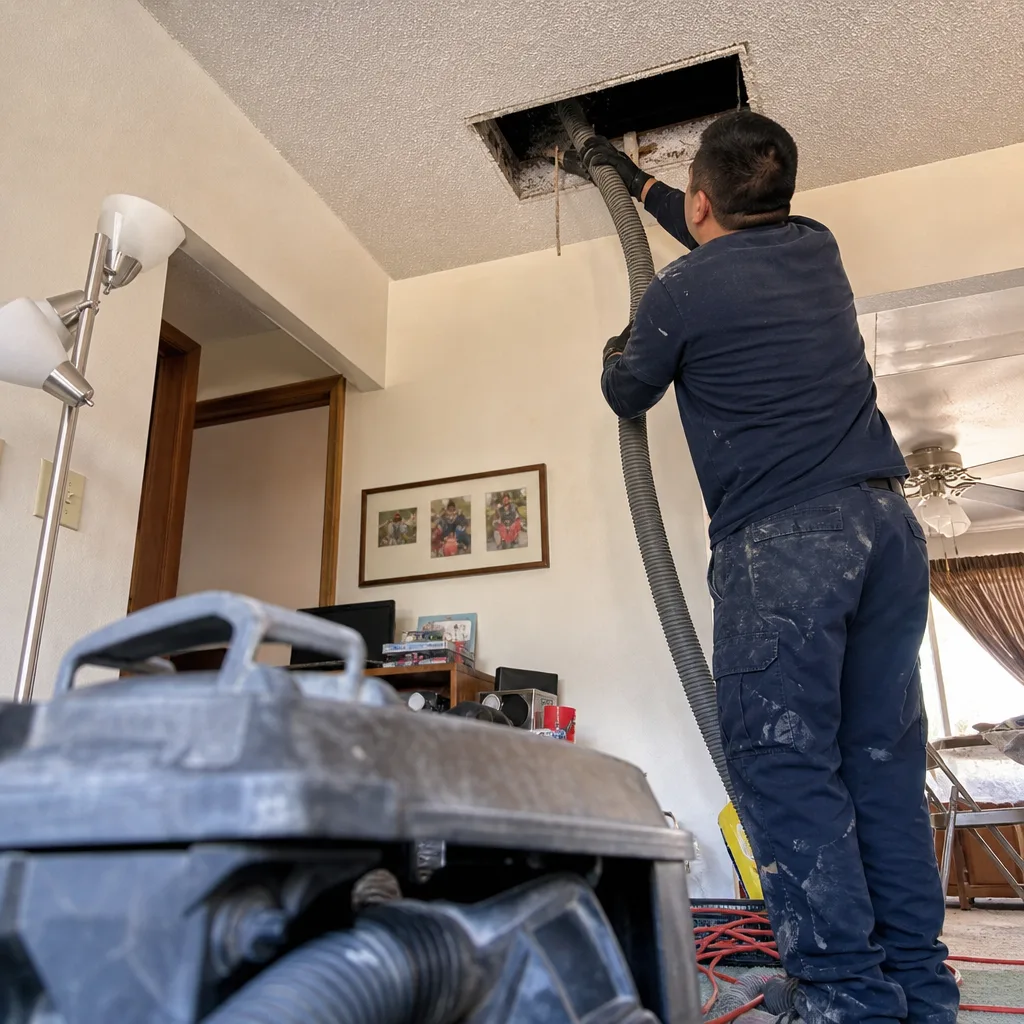 Before
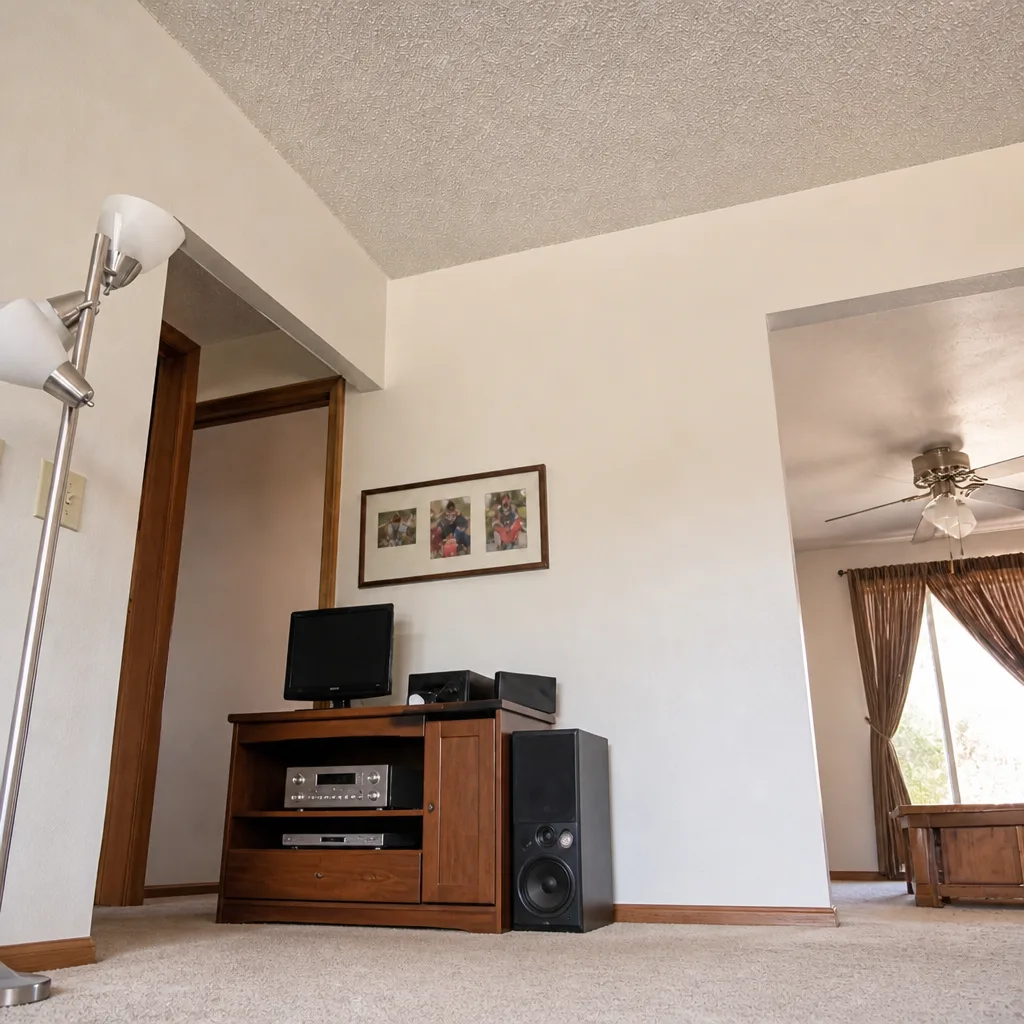 After
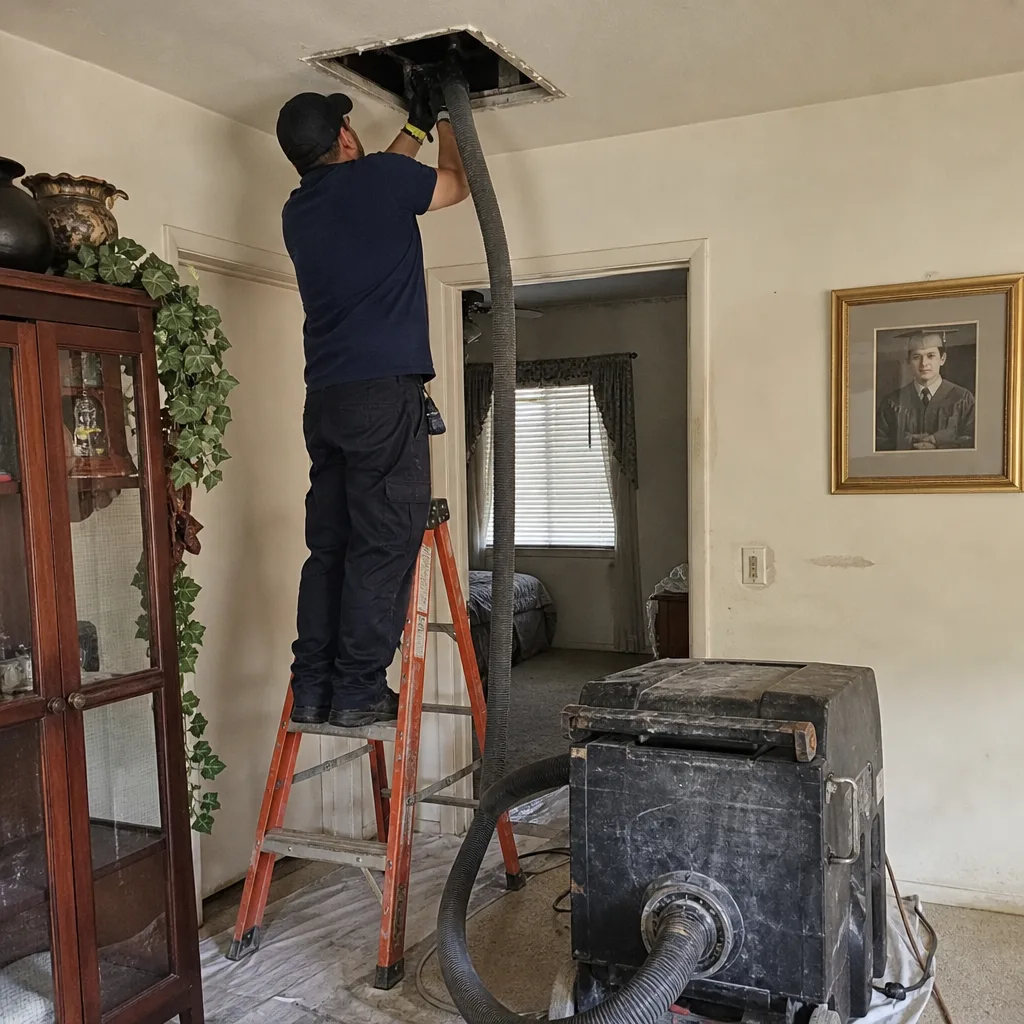 Before
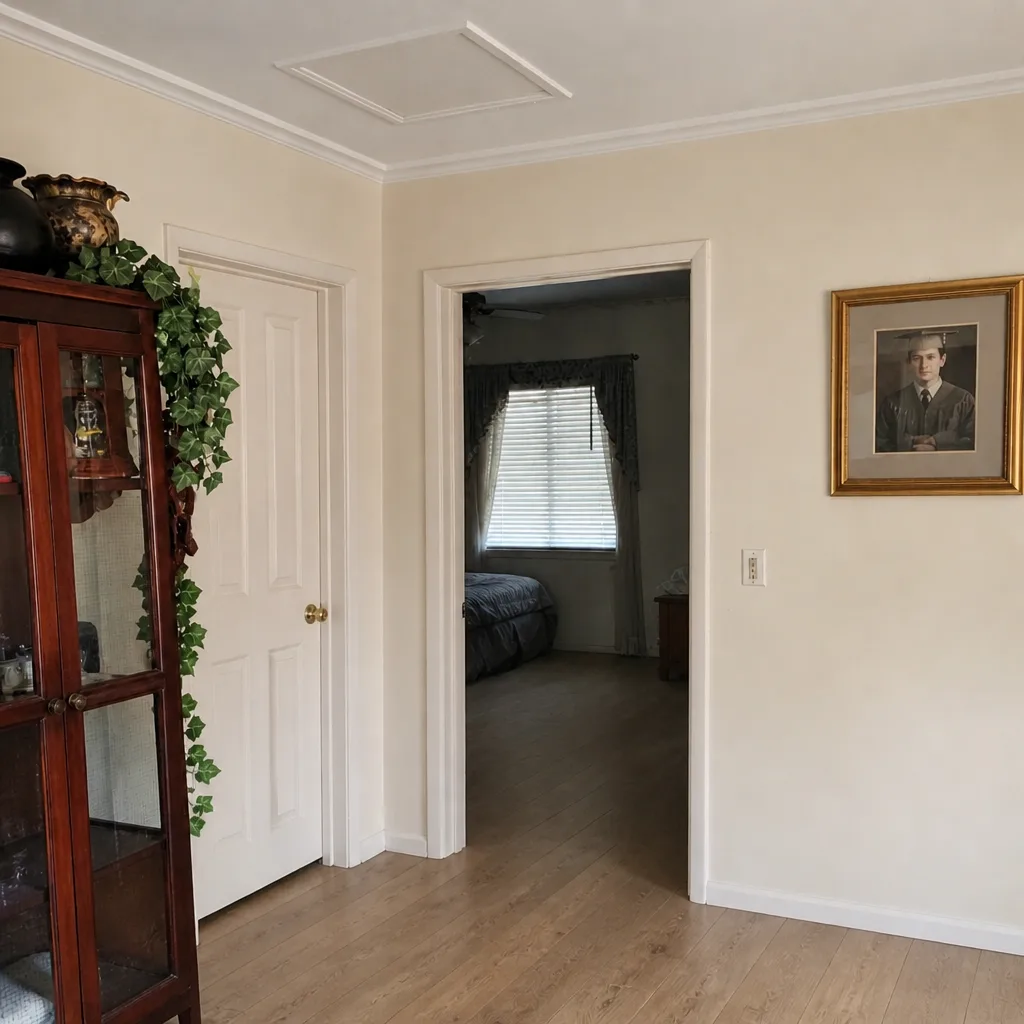 After
 Before
 After
When to Call a Professional
Call a professional when a duct cleaning inspection turns up disconnected joints, kinked runs, torn insulation, or visible contamination that doesn’t respond to a standard mechanical cleaning. Call when your energy bill has jumped without a corresponding weather change and you suspect a leaking trunk line. Call after any water intrusion into attic space, even if the moisture looks dry now. Call when a home inspector has flagged duct work and you don’t have the permit record. And call before you sell if any duct repair in the house was ever done without documentation, because sorting it out in advance is easier than sorting it out during escrow.
La Habra Air Duct Cleaning Pros offers free estimates in La Habra. Call (877) 367-5749. We answer 24/7. Fast dispatch from 7am to 7pm, Sunday through Friday. The estimate is free, and the written estimate sets the final price per job, so a duct repair and its permit scope is priced clearly before any work begins.
Frequently Asked Questions
No. Routine air duct cleaning is a maintenance activity and does not require a permit in La Habra or anywhere else in California. Permits are triggered when the work changes the duct system through sealing, repair, replacement, or relocation. If your cleaning invoice includes any of those, that’s the part that needs a permit, not the cleaning.
Yes, in most cases. Duct sealing is classified as an alteration to the mechanical system under California’s mechanical code and is treated as permitted work. Small joint reseals may be over-the-counter permits; larger sealing jobs, especially aerosol sealing, get fuller review with Title 24 documentation. Call (877) 367-5749 for an exact quote on a permit-scope assessment, and the estimate is free.
Title 24, Part 6, requires that duct sealing and duct replacement meet documented leakage limits verified by field testing, and that new duct insulation meets a minimum R-value for the climate zone. The documentation is submitted with the permit and reviewed at inspection. For a specific scope on your house, call (877) 367-5749 and we can walk through what applies.
Fees are set by the City of La Habra’s current valuation schedule, so a small joint reseal on one trunk line costs less than a full attic duct replacement across a whole house. The permit fee is a real line item and should be listed in the contractor’s quote, separate from the cleaning and separate from the repair labor. Call (877) 367-5749 for an estimate that breaks out permit cost from labor, with a free written quote.
Yes. A home inspector who sees recent duct work without a permit record will flag it, and the buyer’s agent typically requests a retroactive permit, a credit, or a repair by a licensed contractor with a permit filed. The retroactive path is usually more expensive and slower than permitting the work correctly the first time. Call (877) 367-5749 if you’re preparing to sell and need an assessment before the inspection.
Mold remediation in ducts doesn’t have its own state permit, but it does require a documented protocol, containment, and post-remediation clearance testing, and any duct replacement or sealing that is part of the fix still requires the mechanical permit. Skipping the independent assessment or the clearance testing creates liability. Call (877) 367-5749 for a free estimate and a clear scope on what part of the job is remediation and what part is permitted repair.
The Bottom Line
Cleaning is maintenance, and maintenance doesn’t need a permit. Repair, sealing, and replacement are alterations to the mechanical system, and those need a mechanical permit through the City of La Habra, with Title 24 documentation attached. That single distinction is what most homeowners don’t hear when they call for a duct cleaning, and it’s the one that matters at resale, at inspection, and behind an insurance claim. If a cleaning turns up a real repair, treat the repair as a permit-scope project, not a bonus line item. If a contractor tells you La Habra doesn’t require permits for duct work, that contractor is telling you they don’t file them. The right process is the slower one, and it’s the one that stays clean. We supply and install Honeywell and Aprilaire air quality products as part of the same full-system approach, and every job runs on Rotobrush and Nikro equipment with a written estimate before work starts. Call (877) 367-5749 for a free estimate. We answer 24/7. Fast dispatch from 7am to 7pm, Sunday through Friday.
Written by the team at La Habra Air Duct Cleaning Pros.