
Last updated November 23, 2026
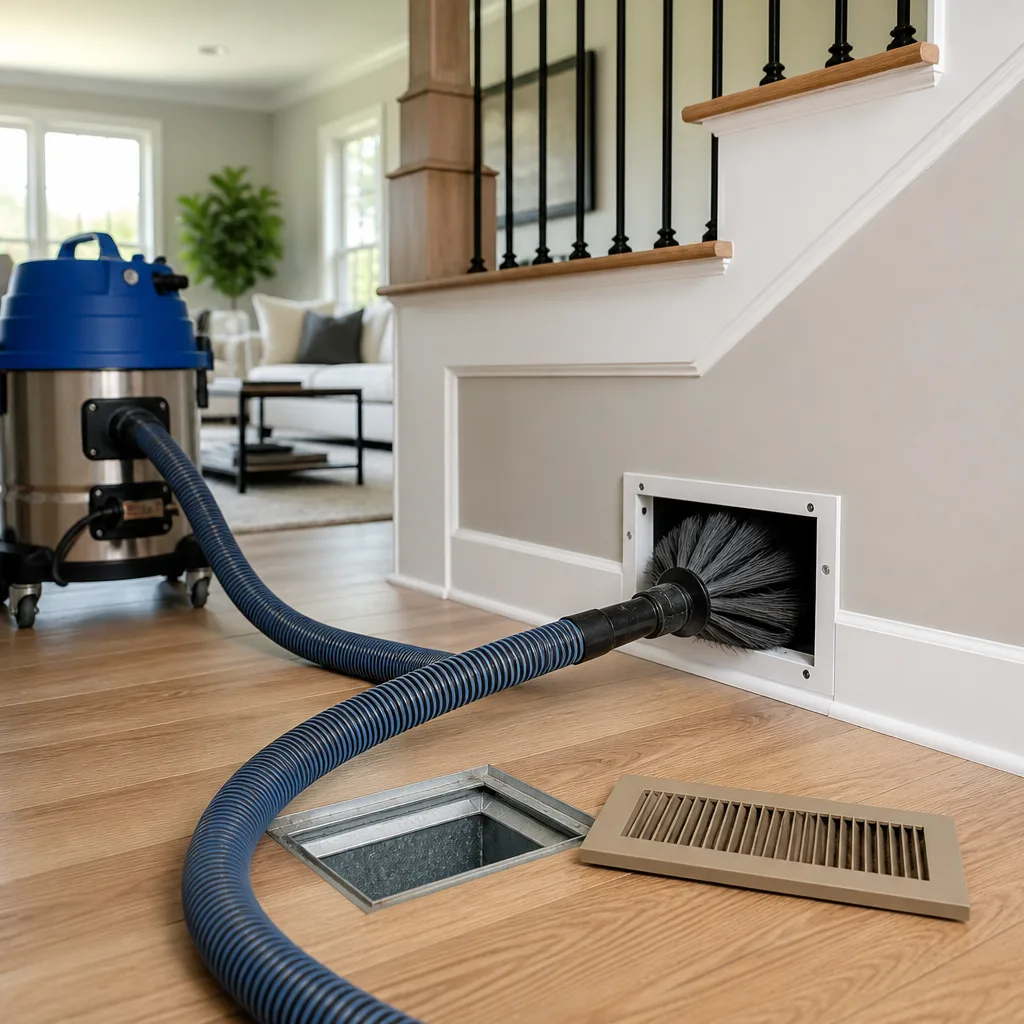 Whole-home duct cleaning
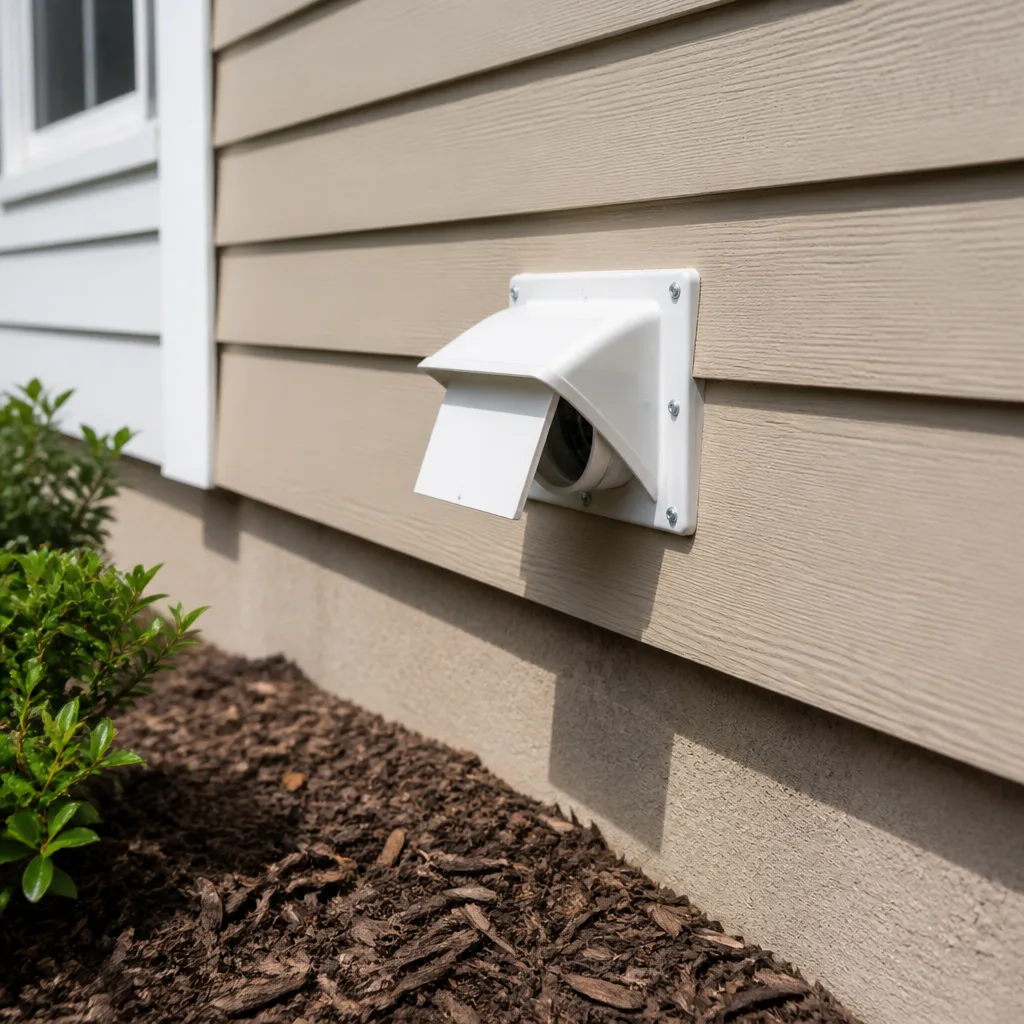 Dryer vent cleaning
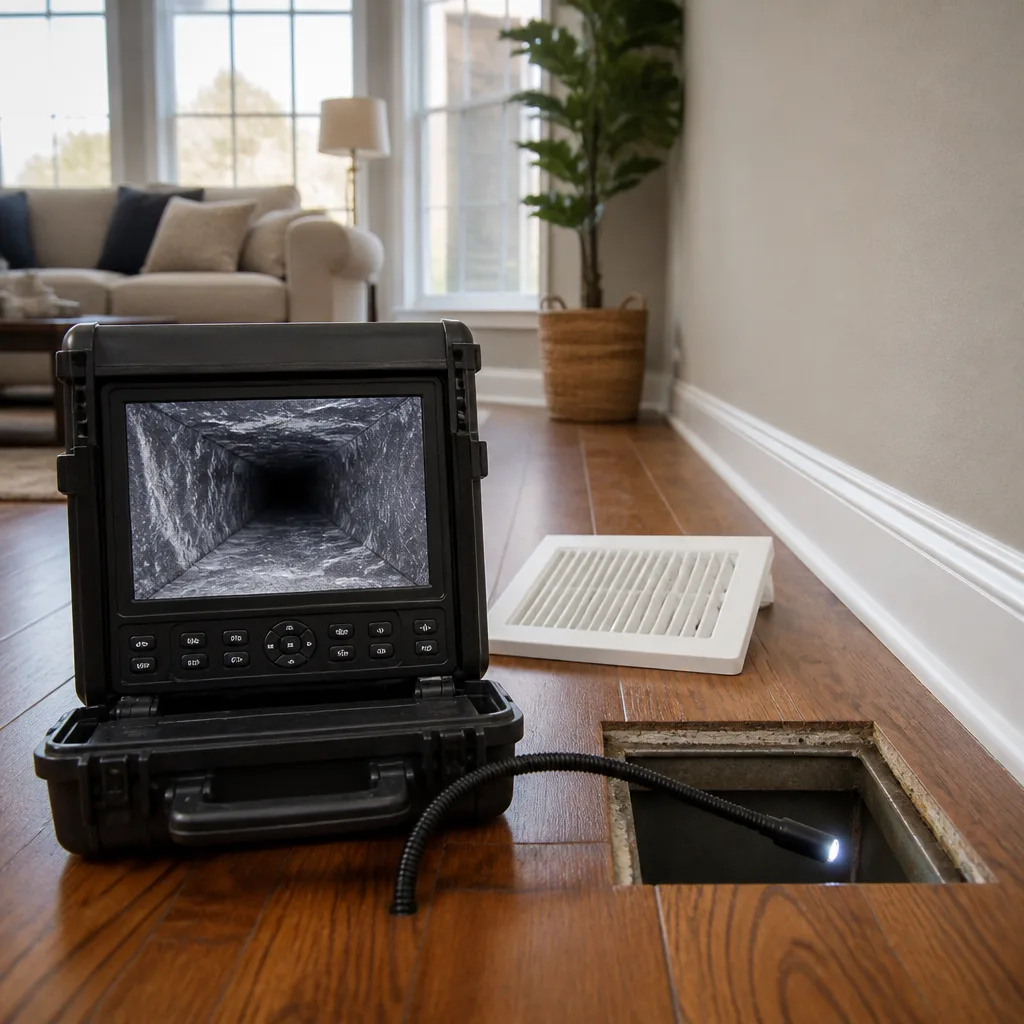 Camera inspection
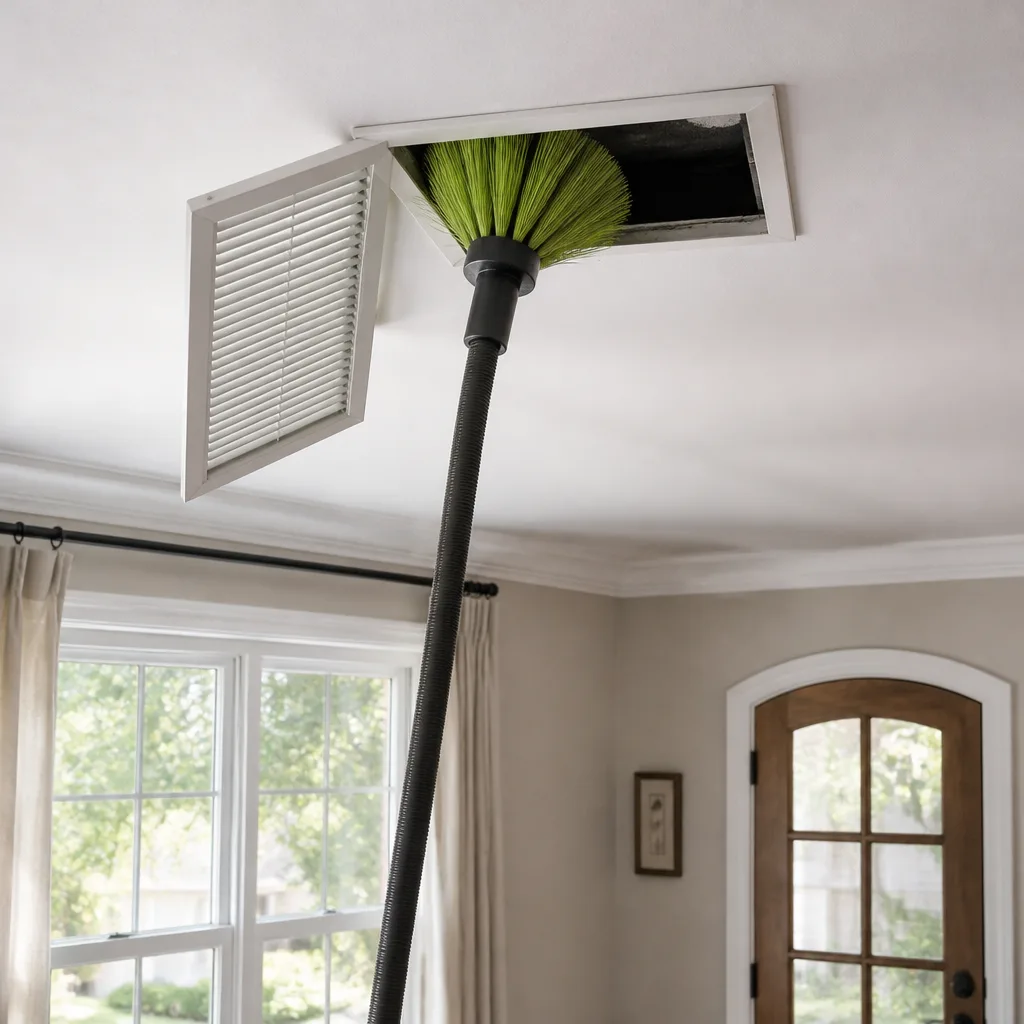 Sanitizing & deodorizing
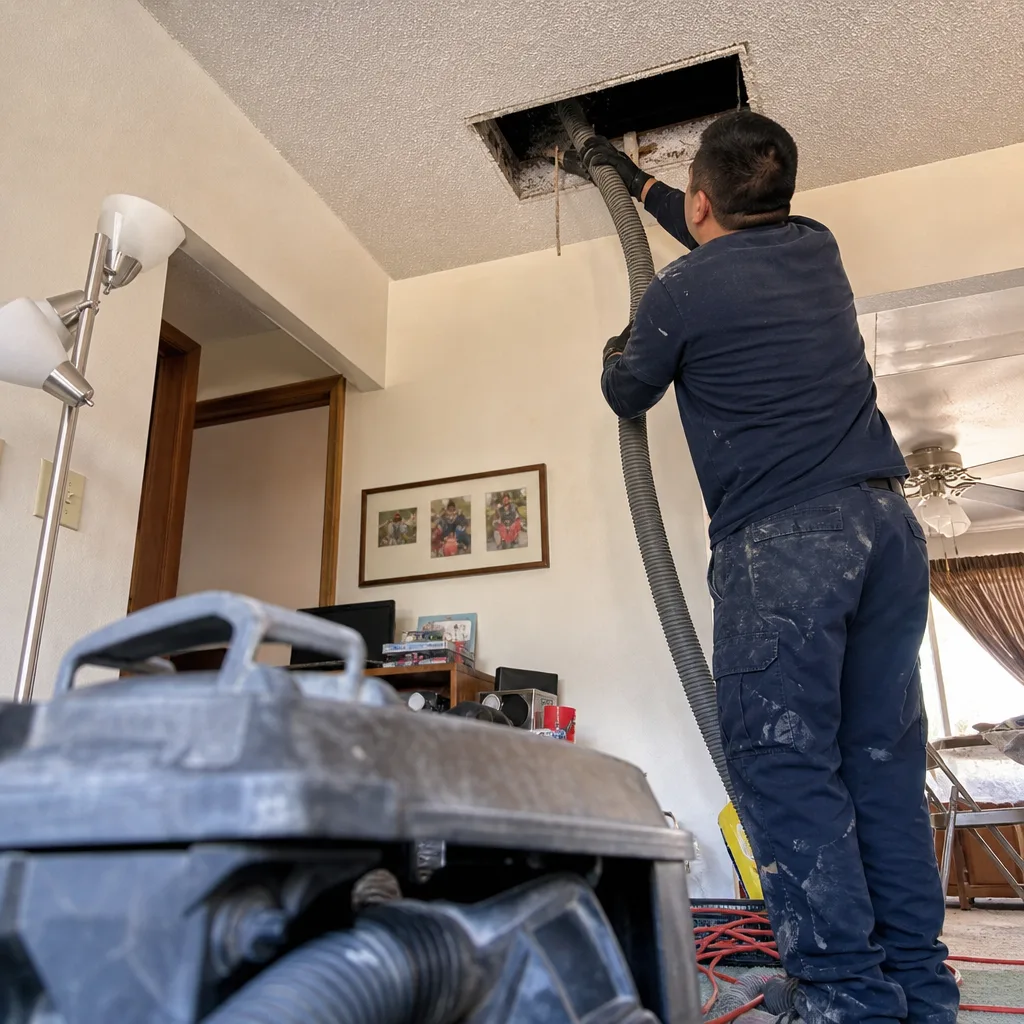
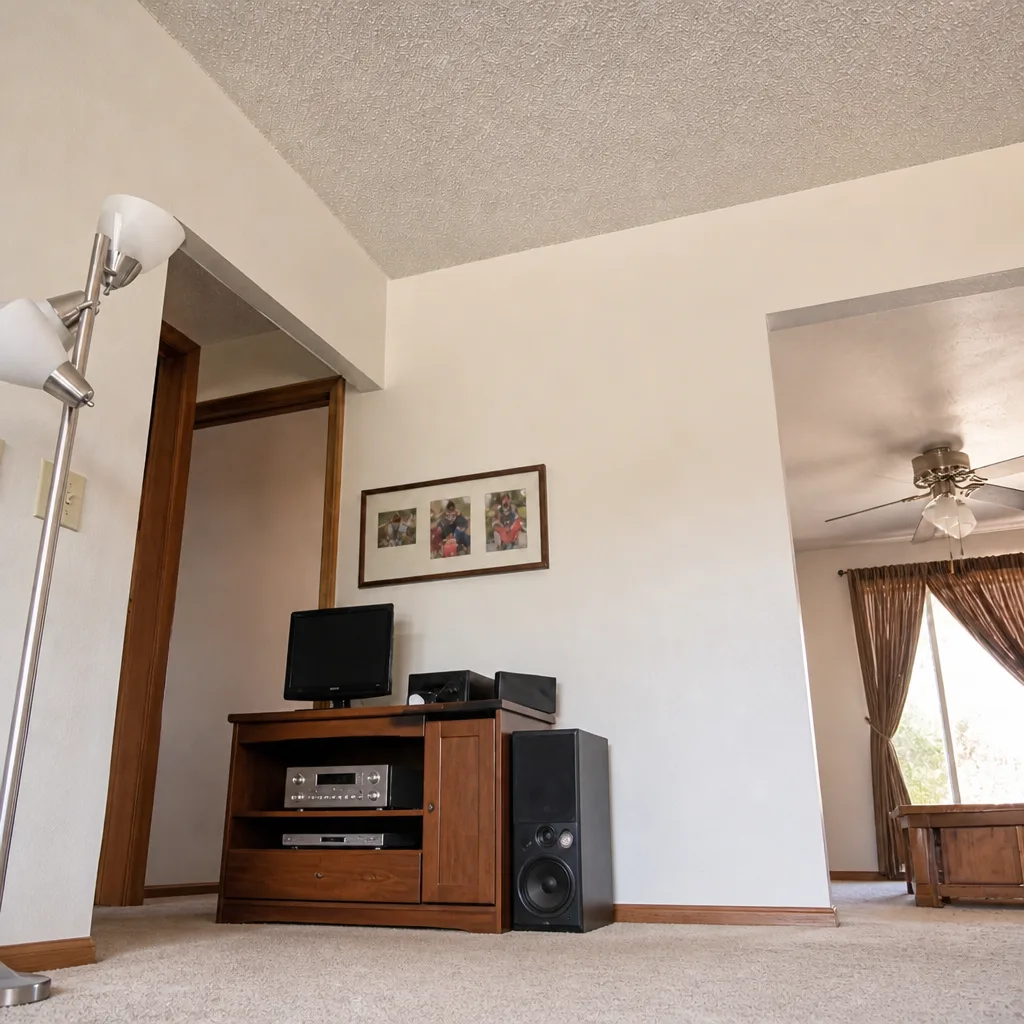
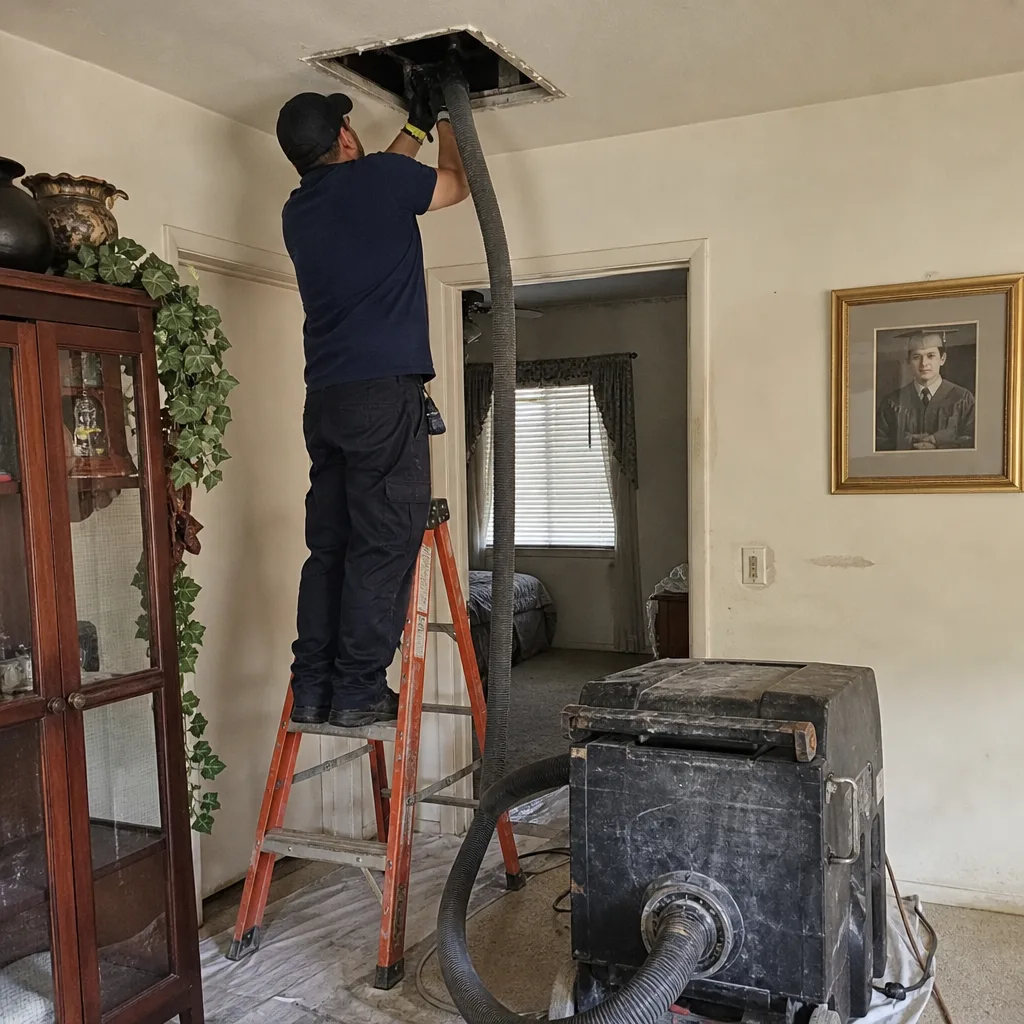
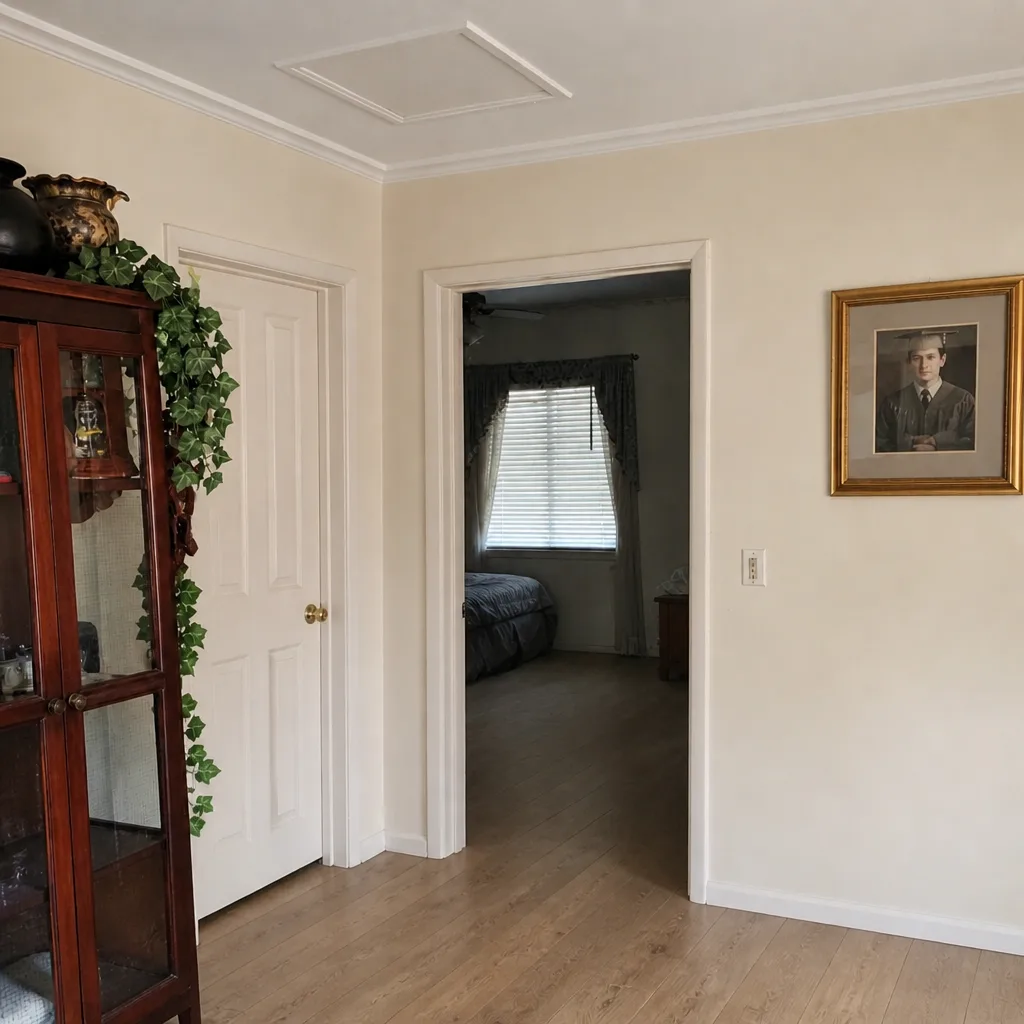
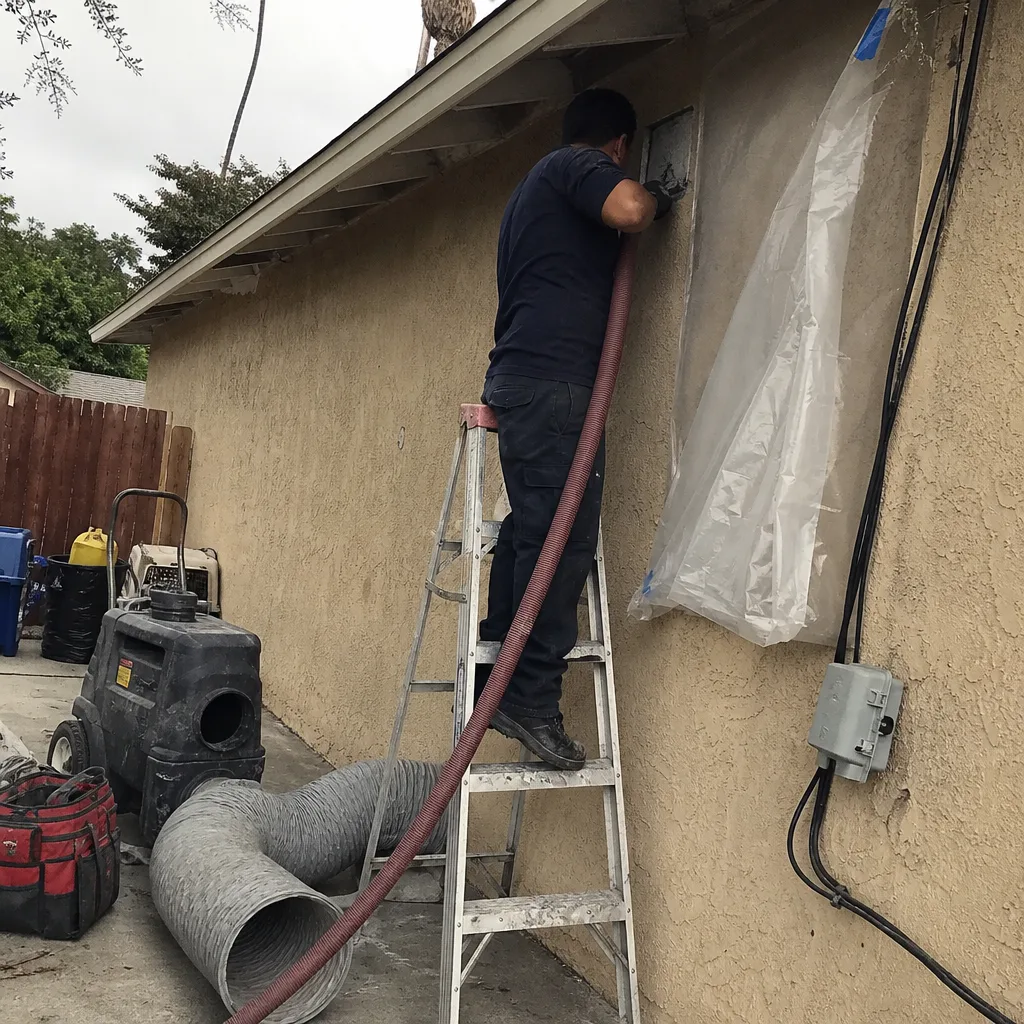
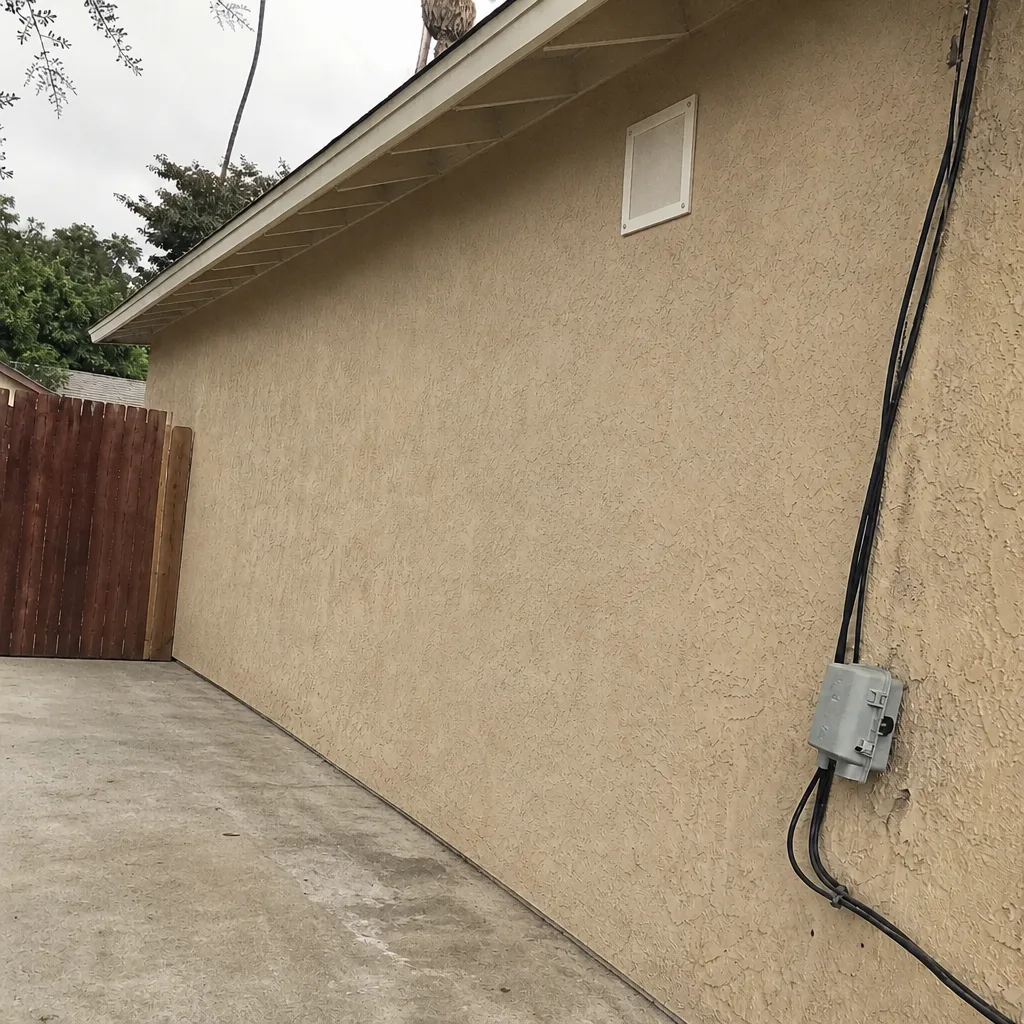
Whole-system duct and dryer vent check with before-and-after photos - you see exactly what came out of your vents
That "$99 whole-house special" is a bait ad - the real number appears once they are in your hallway, or the "clean" is a shop-vac at the register. We photograph the inside of your ducts before and after instead.
The Complete Guide to Air Duct Cleaning in La Habra
Most people assume the ducts in their home have been cleaned at some point. In plenty of La Habra houses, they haven’t. A large share of the city’s residential housing went up before 1980, which means a lot of homes are still running on original metal ductwork that has never had a professional pass through it. Not once in four decades. The vents look fine from the hallway, the air still comes out, and so nobody thinks about what’s coating the inside of the trunk lines. This guide walks through what a real cleaning involves, how the different duct types in La Habra’s older and newer neighborhoods call for different methods, and how to tell a thorough job from a quick vacuum.
Quick Answer
Air duct cleaning in La Habra means mechanically scrubbing and vacuuming the entire duct network, including supply lines, return lines, the plenum box, and the air handler cabinet, using professional equipment like a Rotobrush or Nikro system paired with a high-capacity vacuum. It matters more here than in coastal cities because La Habra sits at the foothills where Santa Ana winds push fine particulate into homes faster. The right method depends on the duct material and the home’s age, which is why a proper inspection comes before a single brush goes in.
Styles & brands we work with
- Whole-home duct cleaning
- Dryer vent cleaning
- Camera inspection
- Sanitizing & deodorizing
Table of Contents
- Why La Habra’s Housing Stock Changes How Ducts Get Cleaned
- How the Santa Ana Winds and Foothill Position Drive Buildup
- What a Full-System Clean Actually Includes
- The Three Cleaning Methods and When Each Makes Sense
- How to Verify Your Technician’s Equipment Is Real
- Cleaning Visit vs. Cleaning-Plus-Inspection: Which Do You Need?
- What Air Duct Cleaning Costs in La Habra
- Common Mistakes to Avoid
Why La Habra’s Housing Stock Changes How Ducts Get Cleaned
The single biggest factor in how your ducts should be cleaned is when your house was built. La Habra has a dense mix of tract homes from the 1950s through the 1970s alongside newer construction from the 1990s and 2000s, and those two generations of housing use completely different duct systems. Cleaning them the same way is a mistake we see repeated by crews who show up with one method and one tool.
Older La Habra homes, particularly in neighborhoods that grew up around the original downtown grid and the streets running toward the hills, typically have rigid sheet-metal ductwork. This is galvanized steel, often with taped or sealed seams and a fair amount of internal accumulation after decades of use. Metal ducts can handle an aggressive mechanical brush and high-volume vacuum without damage. They’re actually the easiest duct type to clean thoroughly, but only if the technician is willing to spend the time on long trunk runs and branches tucked into tight attic and crawl spaces.
Newer La Habra construction from the 1990s onward, including much of the development on the eastern side of the city, tends toward flex duct. Flexible duct is a plastic inner liner wrapped in insulation, and it’s gentler, more prone to tearing, and often sagging where it wasn’t supported properly during installation. A rotary brush run at full speed through flex duct can shred the liner. It needs a lower-speed approach with careful tension control, and in some cases the right answer is replacement rather than cleaning.
Between those two poles sits a third category: homes that have been re-ducted, added onto, or had their HVAC replaced over the years. A 1962 house might have original metal trunk lines feeding a newer flex branch system after a remodel. Mixed systems are common in La Habra and require a technician who can read the layout first.
- Pre-1980 tract homes: Rigid metal ductwork, often original, usually with heavy accumulation. Holds up to aggressive brushing.
- 1990s and later builds: Flex duct, often with sagging sections and possible liner damage. Needs low-speed rotary brushing and visual inspection.
- Remodeled or re-ducted homes: Mixed metal and flex. Method varies section by section.
- Properties with original metal and poor attic seals: Leaky joints pulling attic dust into the supply stream, which cleaning alone won’t fix.
This is why the full-system approach at La Habra Air Duct Cleaning Pros starts with identifying what you actually have. We find what’s wrong and fix it, rather than running the same tool through every house on the block.
How the Santa Ana Winds and Foothill Position Drive Buildup
La Habra sits where the flat coastal plain meets the Puente Hills, and that geography has a direct effect on how quickly particulate builds up inside a home. The Santa Ana winds, which blow hot and dry from the inland desert toward the coast, funnel through the passes and along the foothill communities. Over the course of a season, that airflow deposits fine dust, pollen, ash, and outdoor debris against windows, doors, and every small gap in the building envelope.
That material doesn’t stay on the sill. Every time the HVAC system cycles, it draws return air through the house, and gaps around the air handler, in the return plenum, and at duct joints become entry points. A house a few miles further west, sitting behind a ridge or closer to the coast, sees far less of this because the wind energy has already dissipated. La Habra doesn’t get that buffer. Homes here take the dust load head-on during wind events, and the accumulated fine particulate settles inside the duct system rather than blowing back out.
The practical result is a shorter cleaning interval than the generic “every three to five years” rule you’ll read everywhere. For a La Habra home that runs its system year-round, that keeps windows open during dry spells, or that has had recent renovation work, three years is often the outside edge of what’s reasonable. Homes with pets or allergy sufferers in the household should consider shorter.
There’s a second foothill effect worth knowing about. During fire season, particulate from wildfire smoke travels long distances and settles on surfaces for miles downwind. Anyone in La Habra who noticed visible ash or haze settling on outdoor furniture during a smoke event should assume some of that material worked its way into the return air pathway. The cleaning that follows needs to include the air handler and plenum, not just the register grilles.
Air quality work here isn’t only about what’s coming in. It’s also about what the system is doing with it. Guardsman-grade surface and sanitizing protocols applied after a thorough clean help deal with the biological side once the physical debris is gone.
What a Full-System Clean Actually Includes
Most duct cleaning complaints come down to the same thing: the crew cleaned the grilles, waved a wand in each vent for a minute, and left. That isn’t duct cleaning. A full-system clean touches every component from the return air intake to the supply outlet, and if any piece is skipped, the rest is compromised.
Here’s the sequence a proper full-system clean follows in a La Habra home:
- Inspection and mapping. The technician walks the system, identifies duct material, notes any damage or disconnected sections, and confirms the air handler and plenum layout. This happens before any equipment is set up.
- Containment. For homes with contamination-sensitive conditions (recent renovation, visible mold-adjacent conditions, heavy allergen load), Abatement Technologies negative-air equipment is set up to keep debris from redistributing into living space.
- Supply line cleaning. Each supply branch is cleaned from the register boot back toward the trunk, using rotary brush agitation and vacuum capture simultaneously.
- Return line cleaning. Return ducts typically carry the heaviest accumulation because they draw unfiltered air straight from the living space. These get the most attention.
- Plenum box cleaning. The plenum is the transition between the air handler and the duct trunk. It’s where you’ll find the worst buildup in older La Habra homes because the surfaces are flat and wide.
- Air handler cabinet. The cabinet, blower compartment, and evaporator coil get cleaned. A dirty coil restricts airflow and forces the system to work harder.
- Register and grille cleaning. Removable grilles are cleaned off-site or in-place, and boots are wiped down.
- Final verification. Post-cleaning photos of the duct interiors are captured so the homeowner sees what the inside actually looks like after the work.
Notice that the registers aren’t first on the list and they aren’t the point. The air handler and plenum are where the heaviest deposits collect, and the branches are where the particulate lives day to day. Anyone quoting a price before they’ve seen the plenum is guessing.
The full air duct cleaning scope in La Habra should always include supply lines, returns, plenum, air handler cabinet, and grilles. If a quote only covers vents, ask what’s being skipped.
The Three Cleaning Methods and When Each Makes Sense
Duct cleaning equipment falls into three broad categories, and a good technician picks based on duct material, contamination level, and system layout. Most La Habra homes get a combination rather than a single method applied throughout.
Negative Pressure Cleaning
This is the gold standard for contamination-sensitive jobs. A high-capacity vacuum is connected to the duct system at a single point, usually through the air handler or a cut access hole, and the entire system is put under negative pressure. Every brush stroke or air jet inside the ductwork kicks up debris that gets pulled immediately toward the vacuum and captured. Nothing inside the ducts can escape into the room.
Negative pressure is required for any home where the ductwork has visible biological growth, recent flood or moisture exposure, or heavy renovation dust. It’s also the right approach when someone in the home has respiratory sensitivities. The Abatement Technologies equipment we bring on those jobs is the same class of gear used in restoration and remediation work, which is a level beyond what most duct cleaning outfits bring to a residential call.
Push-Pull Cleaning
Push-pull uses a negative-pressure vacuum at the far end of the duct system combined with compressed air injected at the near end. The air jet agitates debris off the duct walls while the vacuum pulls it through. It’s effective on rigid metal duct systems with long trunk runs, common in older La Habra homes, because the air jet can be routed deeper than a brush head reaches.
Point-of-Contact or Rotary Brush Cleaning
This is where the Rotobrush and Nikro systems come in. A rotary brush is fed through the duct on a flexible shaft, brushing the walls mechanically while a vacuum pulls the loosened material away. It’s the most physical of the three methods and the most effective at removing stuck-on accumulation. Point-of-contact cleaning is the right call for heavily caked metal ductwork and for flex duct cleaned at low speed.
In practice, most La Habra jobs use negative pressure throughout, with point-of-contact rotary brushing as the primary mechanical action and push-pull assist on long trunk runs. That combination is what gets dust that’s been sitting for 40 years.
How to Verify Your Technician’s Equipment Is Real
You can’t watch the inside of your ducts while the technician works. But you can check what’s in the truck before the job starts, and that tells you most of what you need to know.
A professional duct cleaning vacuum is a truck-mounted or trailer-mounted unit rated for at least 1,500 cubic feet per minute of airflow. That kind of vacuum creates real negative pressure throughout the duct system. A shop-vac setup, even a large one, moves a few hundred CFM at best and cannot create the pressure differential needed to evacuate a residential duct system. If a crew arrives with a portable vacuum under 1,500 CFM and no truck-mounted unit, they are under-equipped for the job.
The mechanical agitation side matters just as much. Rotary brush systems like Rotobrush and Nikro are the equipment most HVAC contractors and restoration companies specify because the brush does the physical scrubbing while the vacuum captures. A crew with only compressed air and no mechanical brush is doing an incomplete job on any duct system with accumulation on the walls.
Other equipment markers to look for:
- Access cutting tools and proper resealing materials. A real cleaning requires access holes in the ductwork. A crew that cuts access and doesn’t seal it back properly is creating a leak.
- HEPA-rated containment for sensitive jobs. Negative-air units from a brand like Abatement Technologies signal the crew is equipped for real contamination work.
- Camera inspection equipment. A duct camera lets the technician show you before and after. If they can’t produce footage, they can’t prove the work.
- Post-cleaning photos. Reputable companies photograph the inside of your ducts before they seal up. Ask for those images at the end.
When we send a technician out, the equipment spec is part of the conversation before work starts. If you want to compare what you’re being quoted against what’s actually being done, that’s a fair thing to ask any company.
Cleaning Visit vs. Cleaning-Plus-Inspection: Which Do You Need?
A cleaning visit does exactly what the name says. A cleaning-plus-inspection visit adds a full diagnostic pass over the duct system – checking for disconnected joints, crushed or sagging flex sections, leaks at seams, and airflow problems that cleaning alone won’t fix. The two are different products and different price points.
For most La Habra homes, especially those in the pre-1980 housing stock, the inspection is the more valuable half. Ductwork that’s been in place for several decades has often developed problems that cleaning can’t touch: failed tape at joints, disconnected flex sections that have pulled apart in the attic, sagging runs with crushed insulation, and in some cases small rodent breaches that turn into significant air leaks. A pure cleaning visit leaves those in place. You get a cleaner duct system that’s still leaking conditioned air into your attic every time the system runs.
Homes that warrant a cleaning-plus-inspection visit include:
- Any home where the air conditioning is uneven room to room, or where some rooms never get cool.
- Homes with an unusually high energy bill relative to similar-sized homes in the neighborhood.
- Any house that has had significant renovation work – drywall dust and construction particulate settle in the ducts and can also reveal disconnect issues from trades working around the system.
- Houses where the duct system was installed or reworked by a previous owner and the layout is unknown.
- Homes with a musty smell that returns after the system runs for a while.
If the inspection turns up damaged or disconnected ductwork, HVAC cleaning plus repair and sealing is the correct fix. Cleaning the system and sealing the leaks in the same visit is the only way to resolve both the air quality and the efficiency problem. This is the piece most standalone duct cleaners skip, because they don’t offer repair at all.
What Air Duct Cleaning Costs in La Habra
Air duct cleaning in La Habra typically runs somewhere in the range of a few hundred dollars to just over a thousand, depending on the size of the system, the amount of accumulation, and whether repair or sanitizing is added. A written estimate sets the final price – the ranges below are typical, not exact.
| Service | Typical La Habra Estimate Range |
|---|---|
| Standard residential duct cleaning (supply + return + plenum, up to a typical full-home system) | $350 to $650 |
| Larger or more complex systems (larger homes, multiple zones, heavy accumulation) | $650 to $900 |
| Duct cleaning plus air handler / HVAC coil cleaning | Add roughly $150 to $350 |
| Duct repair and sealing (disconnected sections, leak sealing) | Quoted per job after inspection |
| Air quality sanitizing treatment (post-cleaning) | Quoted per system |
| Dryer vent cleaning | Quoted per run |
One flat price per system, agreed before work starts, with no per-vent pricing – that’s the structure to look for. A price quoted per vent invites a bigger number once the technician counts the vents. A price quoted per system puts the total in writing first.
If you’re also dealing with a dryer vent that’s clogged with lint (a common problem in older La Habra homes where the original venting was installed decades ago and may have been rerouted during a remodel), that’s a separate service. dryer vent cleaning is quoted per run and typically handled in the same visit if you ask for it upfront.
Common Mistakes to Avoid
Most problems with duct cleaning come down to the same handful of mistakes. Here’s what to watch for:
- Hiring on price alone without any equipment check. A quote far below market usually means a smaller vacuum, no mechanical brush, or both. Ask what CFM rating their vacuum has and whether they use a Rotobrush or Nikro rotary system before you commit.
- Accepting a per-vent price. In a La Habra house with 15 to 20 vents and long runs, per-vent pricing is nearly always a teaser. Insist on one flat price per system, agreed before work starts.
- Skipping the plenum and air handler. The registers and branches get the attention, but the plenum and air handler cabinet hold the heaviest buildup. If a quote doesn’t mention them, ask why.
- Cleaning ducts without addressing leaks. La Habra homes with original metal ductwork often have failed seams and disconnected joints. Cleaning without sealing means you’re paying for a clean system that’s still pulling attic dust back in through every leak.
- Using high-speed brushes on flex duct. Flex duct is common in newer La Habra construction, and aggressive rotary brushing can tear the inner liner. Ask how the technician adjusts brush speed for flex sections.
- Not getting post-cleaning photos. A full-system clean should come with interior photos of your ducts, before and after. If the company doesn’t provide them, you can’t confirm the work happened.
- Skipping the inspection when there’s an airflow problem. If some rooms don’t cool well or the energy bill has crept up, cleaning alone won’t fix it. Ask for the inspection and repair pass at the same time.
When to Call a Professional
Cleaning your own duct system isn’t a realistic option – the equipment required is well beyond what a homeowner can rent or buy, and the access work requires cutting and resealing the ductwork. The real question is when to schedule the visit. Call a professional when you notice dust accumulating faster than usual on surfaces after the system runs, when there’s a musty or stale odor that lingers when the HVAC cycles on, when you’ve recently finished a renovation and drywall dust has been pulled through the system, when someone in the household has developed new allergy symptoms, or when your energy bill has crept up with no other obvious explanation.
If your home is pre-1980 and the ducts have never been cleaned, that alone is reason enough to schedule an inspection.
La Habra Air Duct Cleaning Pros offers free estimates in La Habra – call (877) 367-5749. We answer 24/7. Fast dispatch from 7am to 7pm, Sunday through Friday.
Frequently Asked Questions
Air duct cleaning in La Habra typically runs $350 to $650 for a standard residential system and $650 to $900 for larger or heavily loaded systems, with the written estimate setting the final price. Air handler cleaning and repair are quoted separately after inspection. Call (877) 367-5749 for an exact quote – estimates are free.
Cheap quotes usually reflect a small vacuum under 1,500 CFM, no mechanical rotary brush, and a scope that only covers the register grilles. A real full-system clean uses commercial equipment like Rotobrush or Nikro rotary systems with a truck-mounted vacuum, and cleans the supply lines, returns, plenum, and air handler. If the equipment behind the price doesn’t match the scope, the number isn’t a bargain – it’s a different, smaller job. Call (877) 367-5749 for a written estimate you can compare.
Ask for before-and-after photos of the inside of your ducts, taken by the technician during the job. A full-system clean includes access work at multiple points, and those access points let the technician photograph the interior directly. If a company can’t produce post-cleaning photos, you have no way to verify the work. Ask about photos when you book: call (877) 367-5749.
For most La Habra homes, every three to five years is a reasonable interval. Homes near the foothills, homes that keep windows open during Santa Ana wind events, and homes with pets or allergy sufferers often benefit from a shorter cycle. Pre-1980 homes with original metal ductwork that has never been cleaned should schedule an inspection first regardless of the calendar. Call (877) 367-5749 to talk through your situation.
Yes, when the source is accumulated particulate or biological growth inside the duct system. Cleaning removes the debris, and a sanitizing treatment applied after the clean deals with remaining growth on duct surfaces. If the musty smell returns quickly or originates from the air handler or evaporator coil, the coil cleaning portion of the job is the fix. Call (877) 367-5749 to book a full-system evaluation.
Yes. Dryer vent cleaning, HVAC cleaning including coil and air handler work, duct repair and sealing, and air quality sanitizing are all handled as separate services under the same visit when the homeowner asks for them upfront. Bundling the work into one visit usually saves a second trip. Call (877) 367-5749 for a combined estimate.
The Bottom Line
La Habra’s duct cleaning needs come down to two facts: the housing stock is old enough that a lot of ductwork has never been cleaned, and the foothill location loads the system with more particulate than coastal cities further west. Cleaning a pre-1980 home with original metal ductwork isn’t the same job as cleaning a 2005 build with flex duct, and the technician needs to know the difference before setup. Full-system scope – supply, return, plenum, air handler – plus the equipment to back it up (a 1,500 CFM vacuum, a Rotobrush or Nikro rotary system, and inspection with photos) separates a real cleaning from a vent wipe-down. Add repair and sealing to the scope and you resolve both air quality and the efficiency loss at the same time. Clean, seal, sanitize: that’s the full-system approach, and it’s what a La Habra home actually needs.
If you want the job done right, call us. We’ll inspect first, quote the full system in writing, and show you the result.
La Habra Air Duct Cleaning Pros
Call (877) 367-5749. We answer 24/7. Fast dispatch from 7am to 7pm, Sunday through Friday.
Written by the team at La Habra Air Duct Cleaning Pros.
See the difference
 Before
 After
 Before
 After
 Before
 After